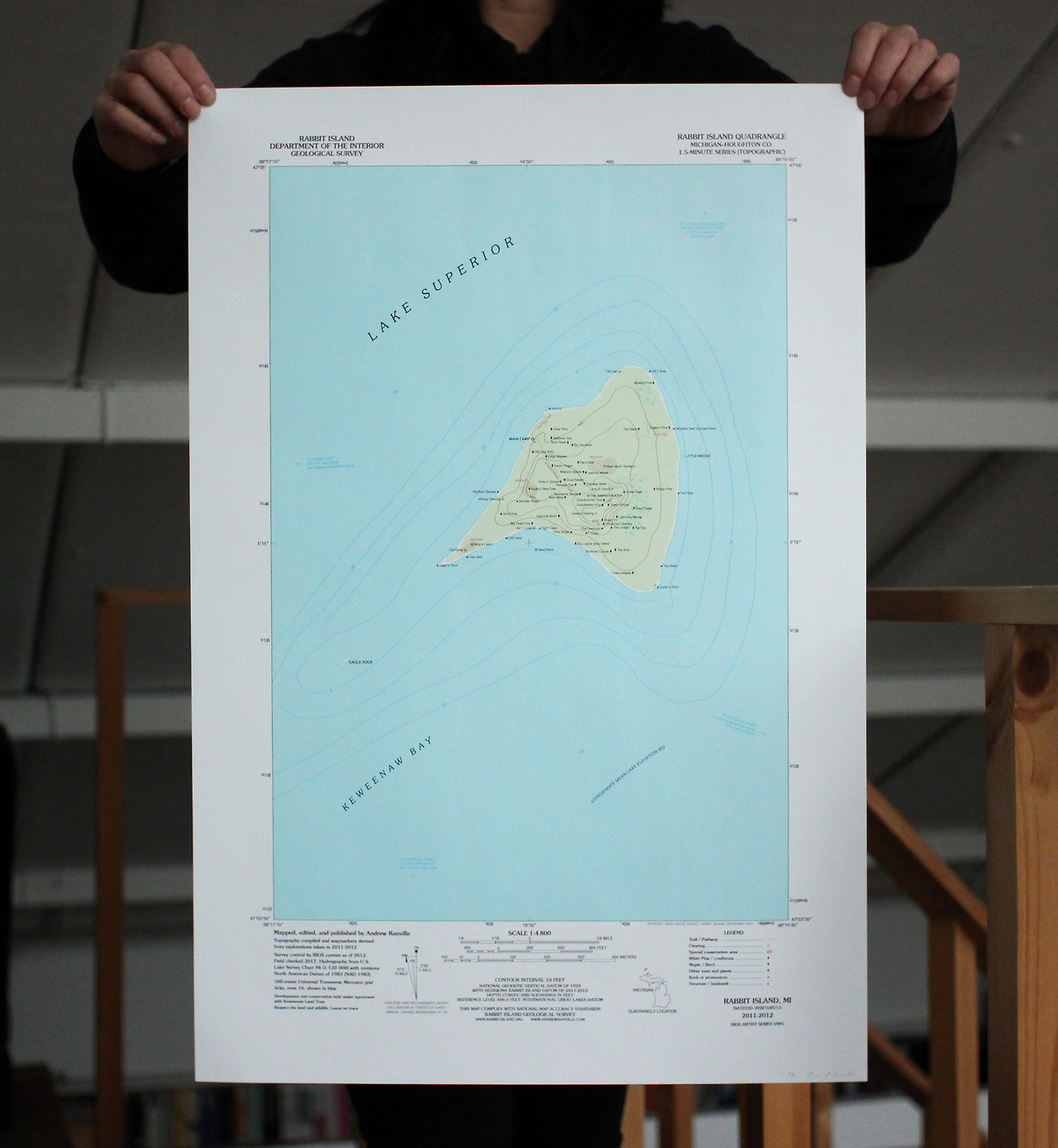
Rabbit Island Quadrangle by artist and cofounder Andrew Ranville.
The official Traverse Island quadrangle represents Rabbit Island at the classic 7.5-minute, 1:24,000 scale which all quadrangles across the United States were mapped at. It was field checked by the agency in 1954 and further revised using aerial photographs in 1975. While it does place the island in the context of Keweenaw Bay it provides little detail of the island itself.
The mapping of the United States by the 7.5-minute topographic maps—the most detailed of the quadrangle series—was an immense and impressive undertaking, championed by an equally impressive man: the second director of the USGS, John Wesley Powell.
Unfortunately, those iconic topographic maps are no longer being produced by the USGS and the program was “completed” in 1992. Now US Topo maps are the future, though they are inferior in terms of both aesthetics and function. The new US Topo/National Map quadrangle of Traverse Island actually cuts the north shore of the island completely off.
My intention was to map the island at a much more detailed scale than the historic quadrangle maps and publish it as an artist’s print, in an edition in collaboration with the USGS themselves. Unfortunately the same budget cuts and congressional pressure which brought about the poor US Topo map series resulted in a curt response. Undeterred, I continued gathering data via circumnavigations, transects, and waymarking over 2012, adding to the data I collected in 2011. Illustrating the map from scratch, I completed the first version in early September. Thus the island can now be seen at 1.5-minute series (1.5 degrees of latitude and longitude) at a scale of 1:4,800. The printed edition—unlike the digital version provided above—contains markedly more details and waymarks.
Map logistics were a challenging issue. In the end one of the most instrumental people in making the map a reality was an actual USGS employee, Doug Thomson. He formerly ran the lithographic printing press at the USGS headquarters in Reston, Virginia, and provided invaluable technical advice and support including Pantone color translations to match the original inks with the spot colors used in the print.
To honor the tradition of the classic topographic maps I had the map created lithographically on paper closely matching the color, weight, and feel of original maps. Jack Eberhard and the staff at Book Concern Printers in Hancock, Michigan were unflappable, working down to the wire to have the map printed in time for the No Island is a Man exhibition.
The final result is an edition of 275 maps at 16.25" x 24" (approx. 41cm x 61cm), five spot color on 70lb NewPage Anthem matte coated stock.
These limited edition prints can be purchased online by donating $40 to support the Rabbit Island residency program.
+ Available here at our online shop
While I view my cartographic research on the island as an extension of my arts practice, I greatly appreciate the practical and scientific value this work presents. I hope it will provide a valuable resource to future researchers and artists, and serve as a lens that further-afield friends and acquaintances can use to experience the island in some small way. The map is not exhaustive, it would be foolish to attempt a map that was. After all, some things are best left to be discovered first hand.
–Andrew
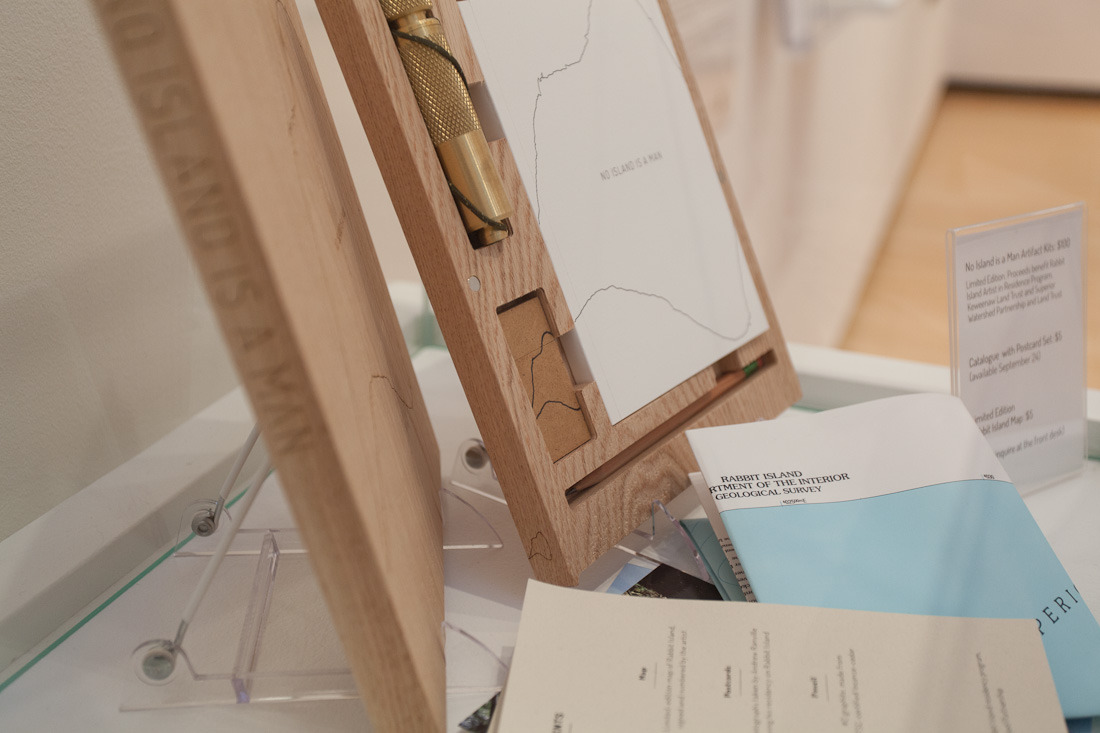
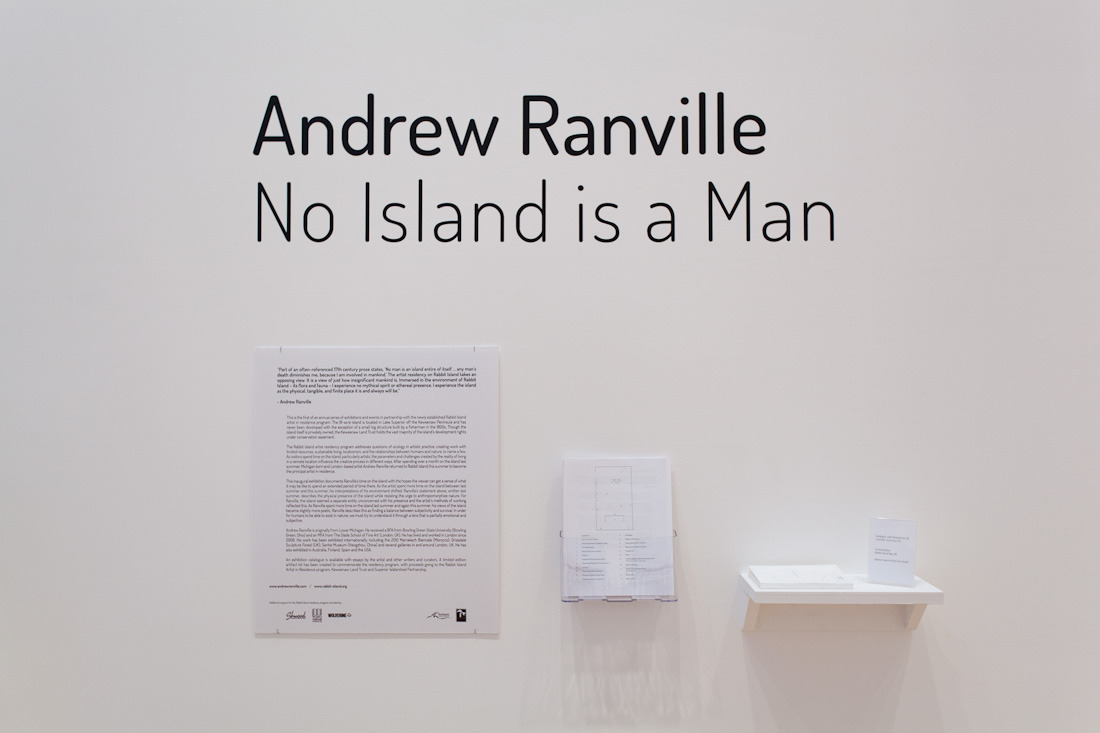
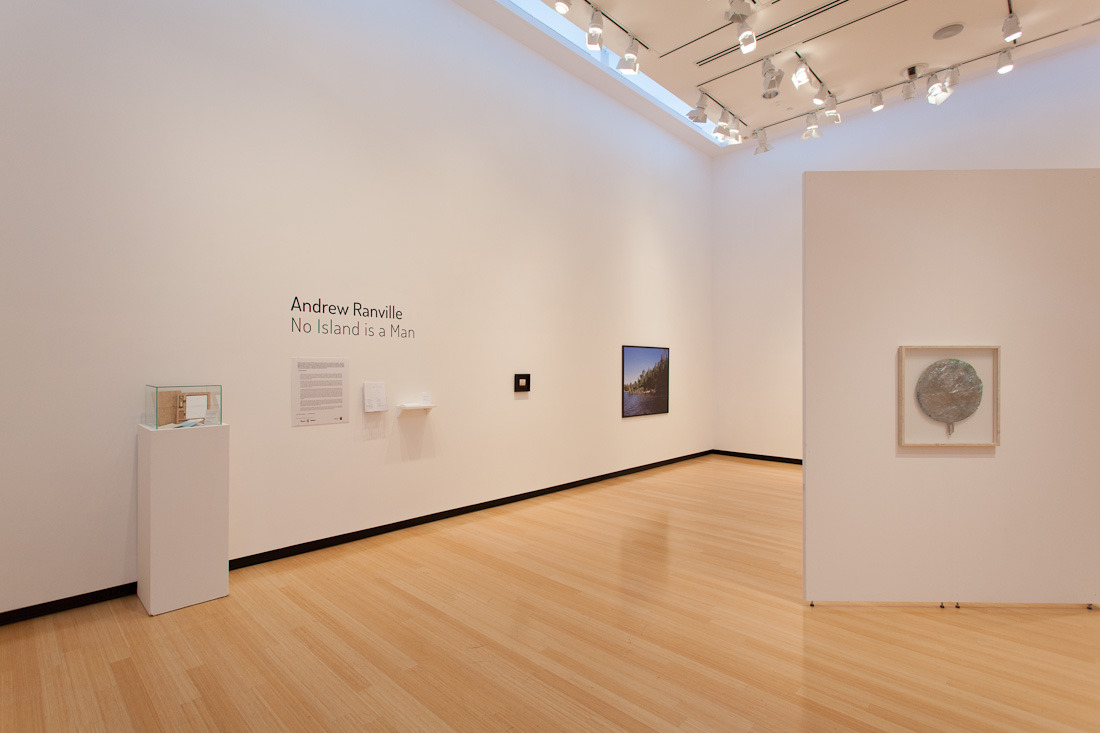
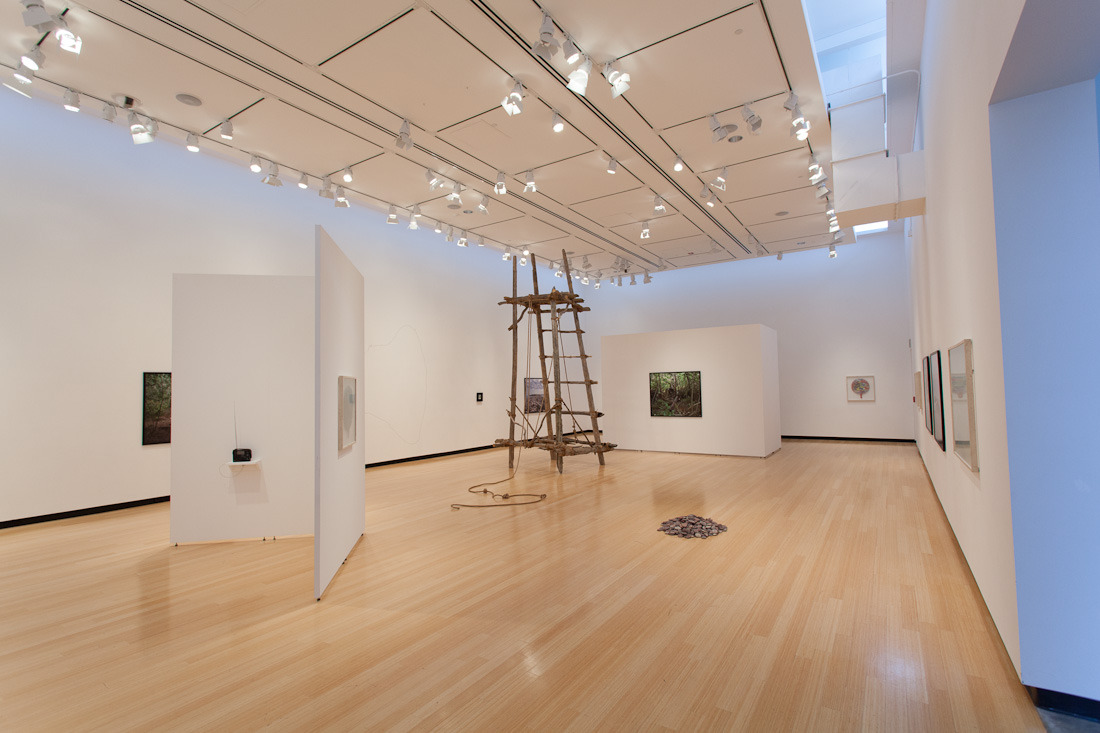
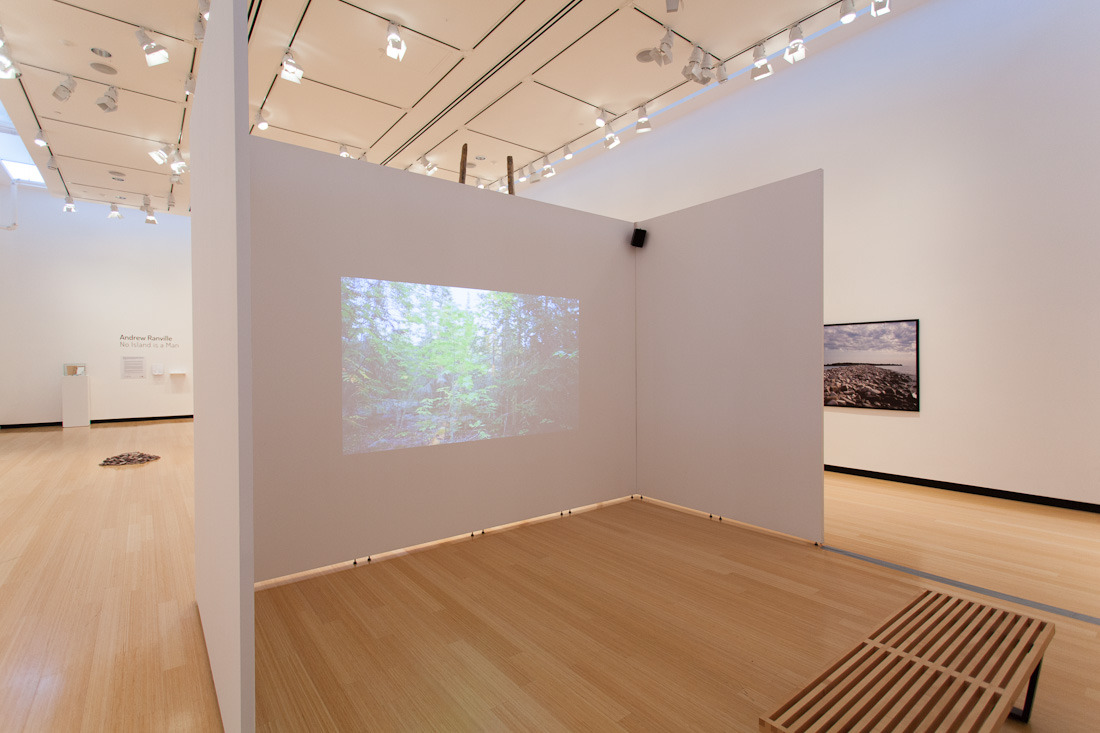
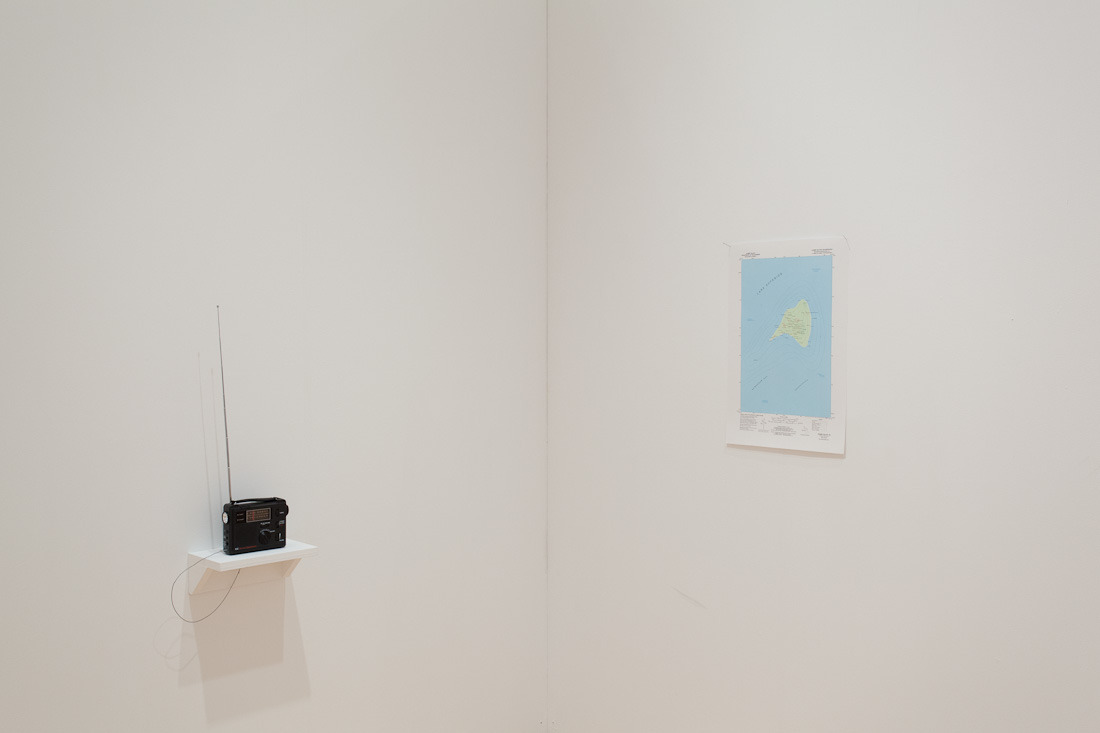
Photos from Andrew Ranville’s exhibition No Island is a Man currently showing at the DeVos Art Museum. More on how you can get your hands on limited-edition maps, catalogs, and artifact kits soon.
The exhibition runs until December 14th, so head on over and check it out if you’re in the area.
Also check out Andrew’s artist talk at the university’s media site. (Download the plugin to view it.) The Rabbit Island discussion starts about halfway through.
Field Research Notes:
Well, I finally made it to the island. It’s obviously a great place! Superficially it has some differences to the mainland which are interesting. I find it reminiscent of the Pacific Northwest: the extensive arboreal lichens, sphagnum, and notable lack of decomposition (absence of fire?). Not that you don’t see this on the mainland, but it seems more pronounced on the island.
As you mentioned there are Peromyscus on the island. You’re also probably aware of the least chipmunk. During our visit we placed 50 Sherman live traps in a rather tight pattern. (If traps are widely dispersed captures rates usually increase because a greater number of home ranges are represented.) On the first night we captured 14 red-backed voles. In the “north woods” a 28 percent capture rate with low trap dispersion is a high number. This could be the results of inter-annual fluctuations. Alternatively, it could be due to lack of terrestrial predation.
I recently had an interesting conversation with Buzzy Butala (a long time Keweenaw guide, hunter and trapper). He described how fisherman used to drop him and his buddies off on the island in the morning and pick them up in the late afternoon. During the day they would “easily” shoot 40, 50, or 60 rabbits. This again suggests high numbers of mammalian prey. He also added that they were often “scrawny little things” compared to the mainland, further suggesting little to no terrestrial predation and food limitation.
This leads to some questions about research projects. One potential project would involve a genetic analysis of the red-backed voles. Does the island population show a reduction in genetic variability as compared to the mainland? Is there evidence of molecular divergence from the island population compared to the mainland? The lack of replication (only one island) is an issue, but there are ways this might be handled. My question initially is; would killing 30 voles be acceptable? I’m not sure how this fits in with the vision of the island or the conservation easement. A second possible project would involve foraging behavior and predation risk, using an island-mainland comparison. We use trays with sand and seeds to measure what’s referred to as a giving up density. This is a density of seeds eaten by a mammal in a subscribed sample area providing a reproducible measure of when individuals cease using a resource. The risk of predation can influence the giving up density and inferences can then be drawn as to population dynamics.
These two projects would be dependent upon graduate student interest, meaning it could happen next month or perhaps down the road. If a graduate student does express interest, I (or they) would then provide detailed research proposals. Before proposing either of these ideas to a student I wanted to make sure the general concept was acceptable.
There is a third potential project that I would be interested in pursuing myself. A comparison of vole–and possibly rabbit–population dynamics on the island vs. the mainland. This would be a long-term study: five years minimum; ten years would be good. This project would involve mark-&-recapture (live trapping) of voles and rabbits for one week every year. Again, there are challenges that would have to be overcome. For example, will hunting ever be allowed on the island? Rabbits are notoriously hard to live trap and this would obviously have some effect on the population. Trapping grids would have to be established, etc. This wouldn’t require trails but when the lines are traversed it will leave some signs of human activity through a portion of the dense island vegetation. I would also need to identify a mainland reference site. Preferably one that has vegetation similar to the island that is not heavily impacted by humans.
Cheers,
John
+ This is exciting.
+ Interesting study proposals.
+ We encourage the study of Rabbit Island. See the Rabbit Island Science Foundation discussion for more information.
+ Creating an environment where human activity exists and is fulfilling but does not detract from the baseline biologic potential of the land will be an interesting practical and symbolic experience.
+ Lake Superior has just had three of the warmest average summer surface temperature trends on record–a historic change.
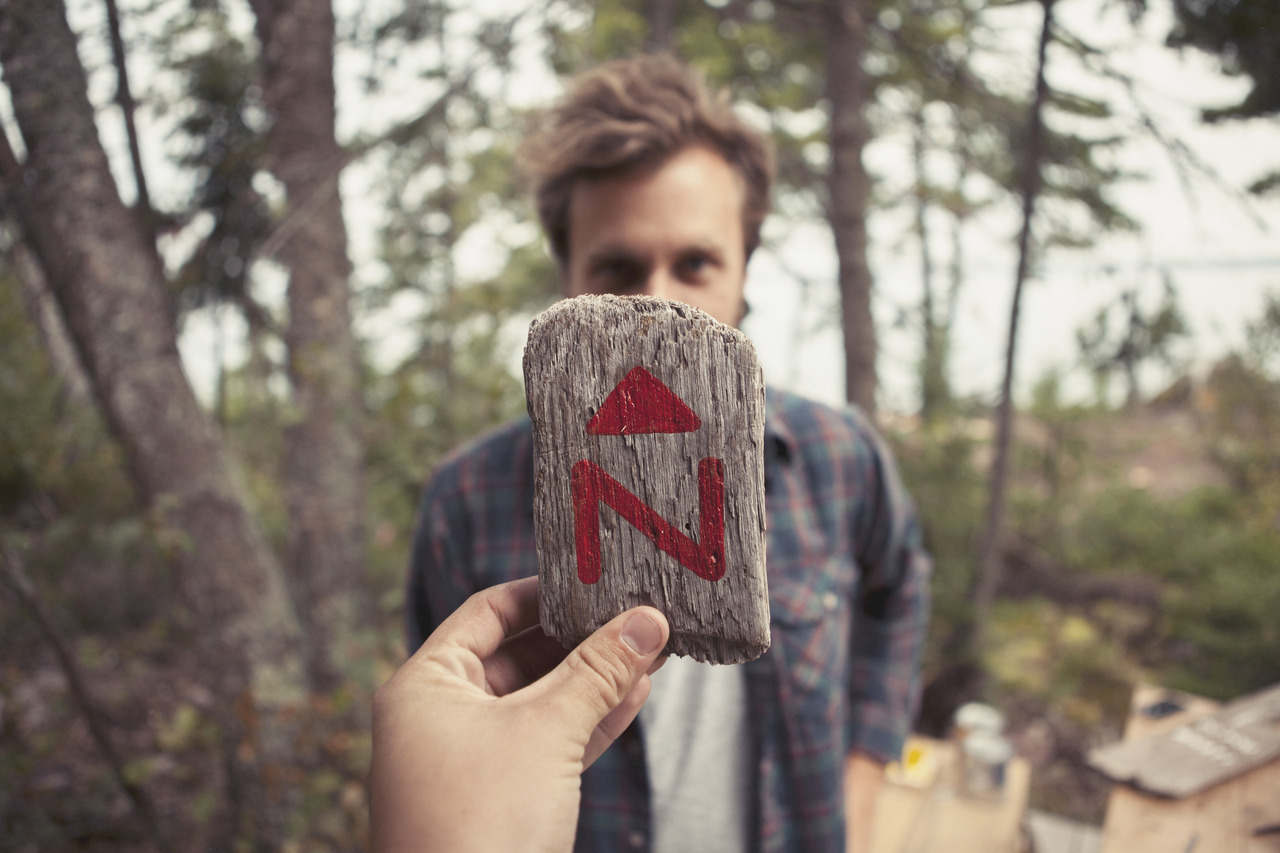
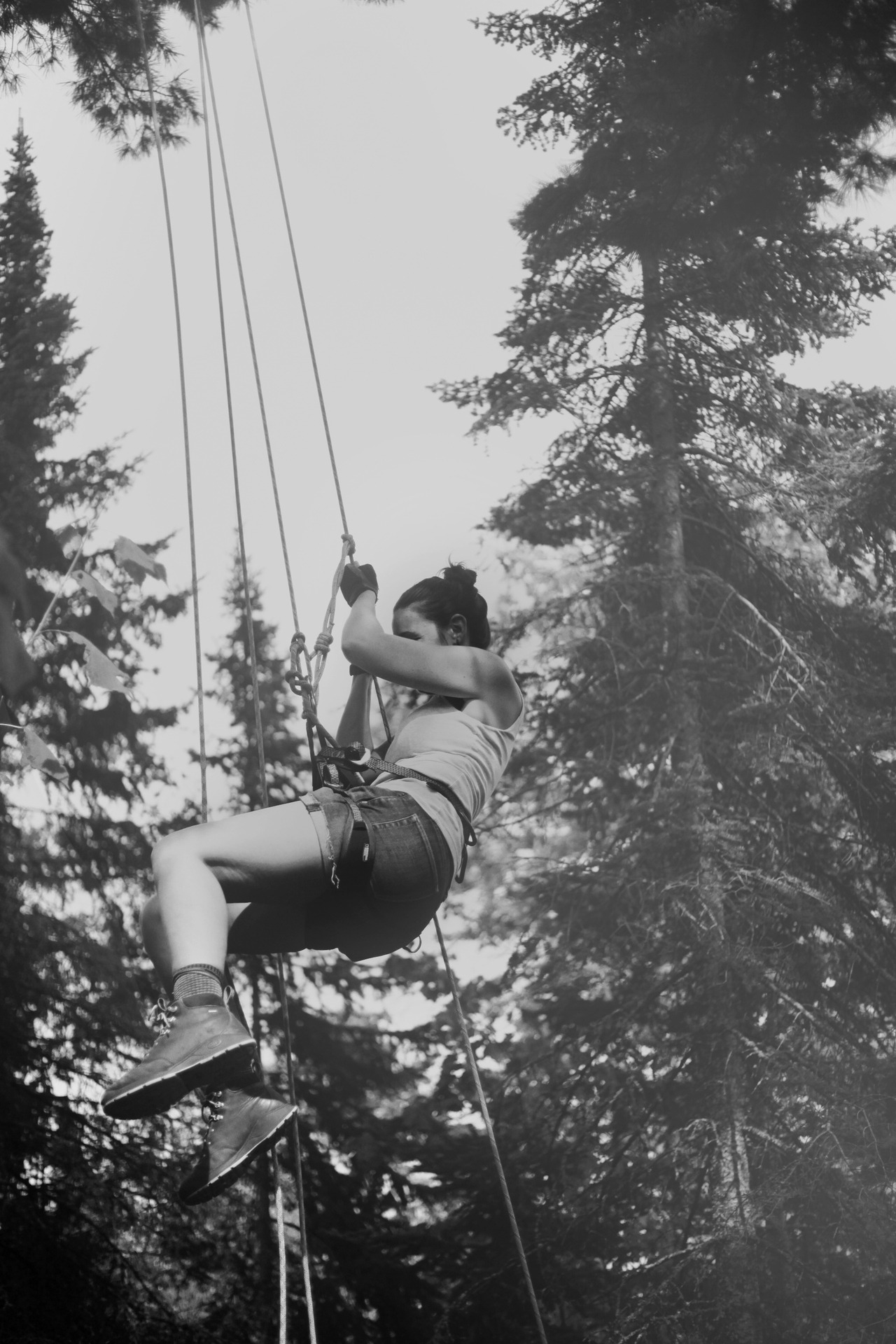
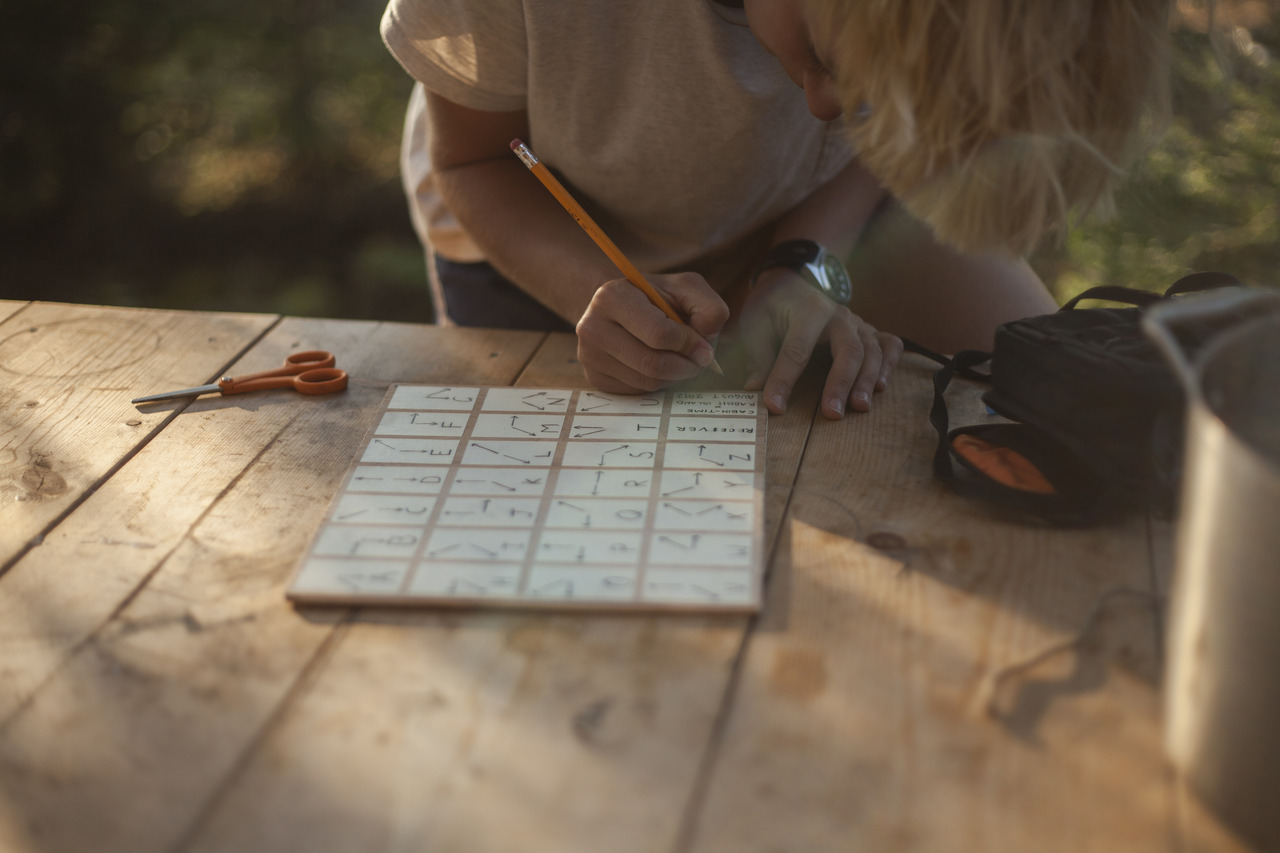
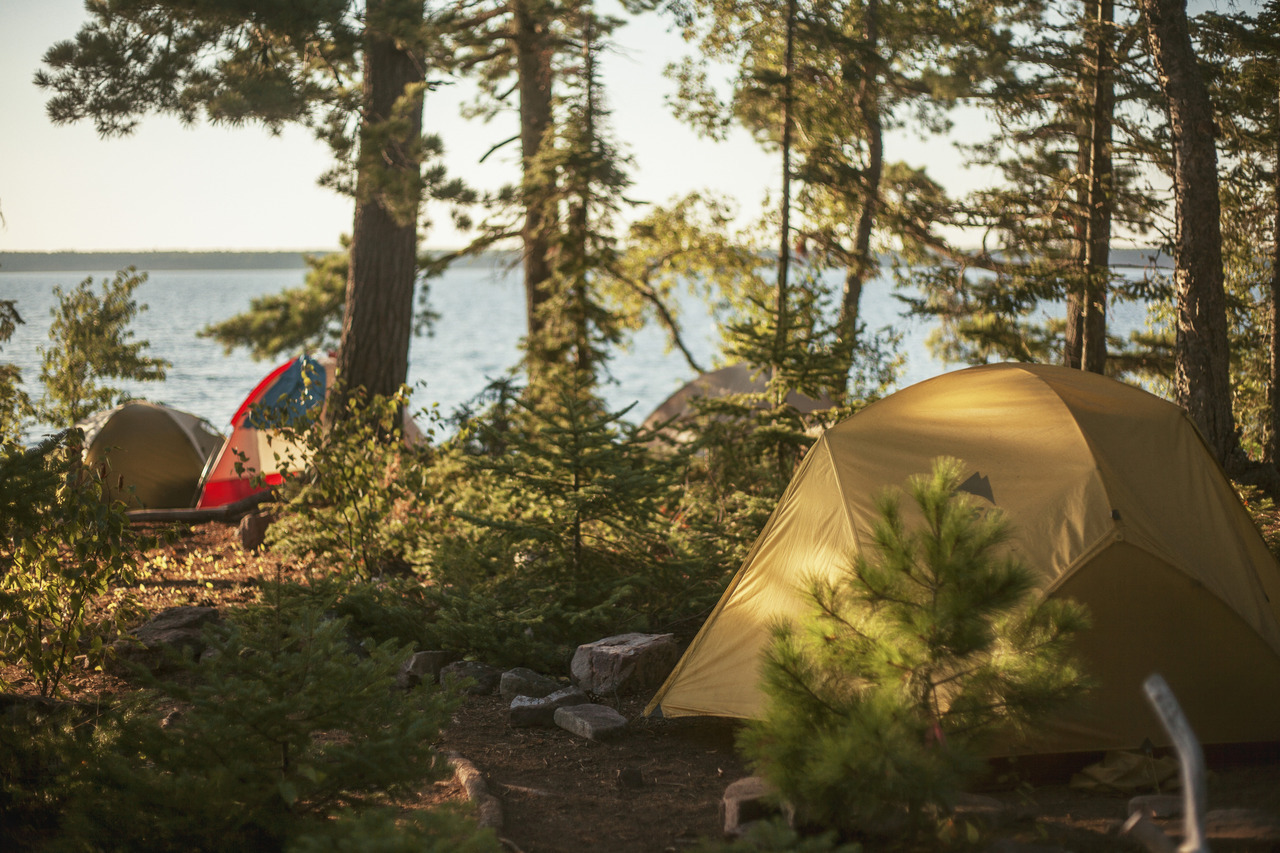
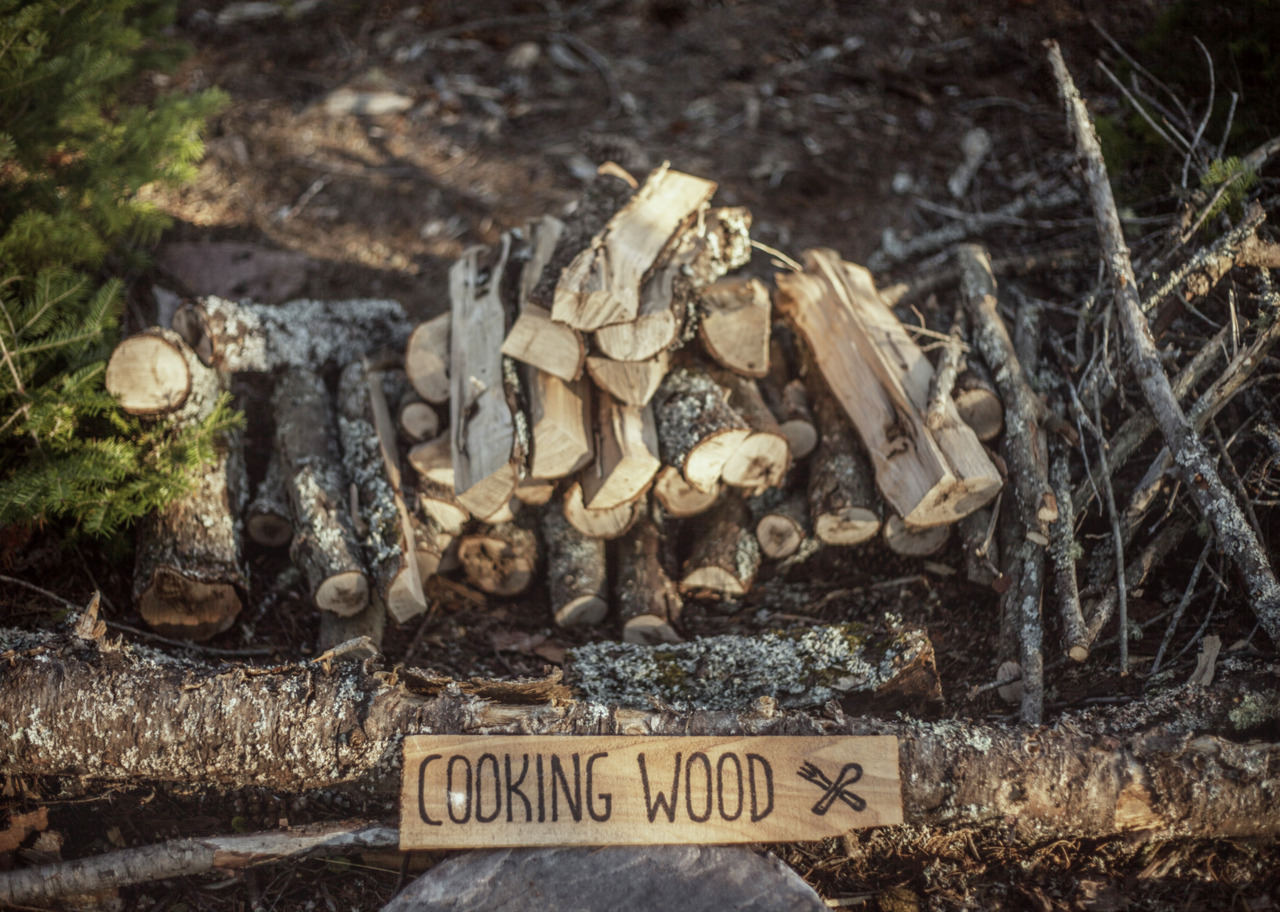
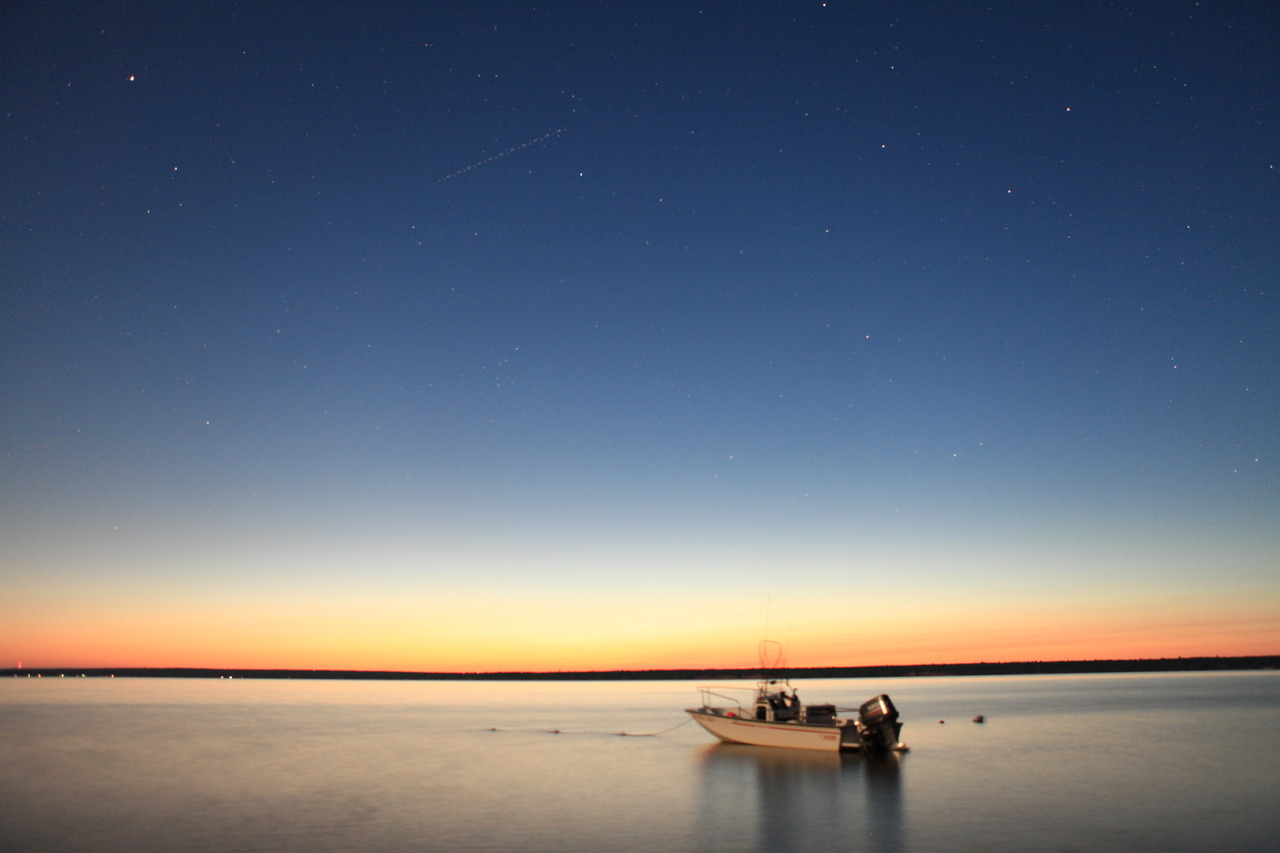
Cabin-Time: Rabbit Island @ MISCELLANY opens tonight in Grand Rapids, Michigan. 6pm!
+ photos via Colin McCarthy and Cabin-Time
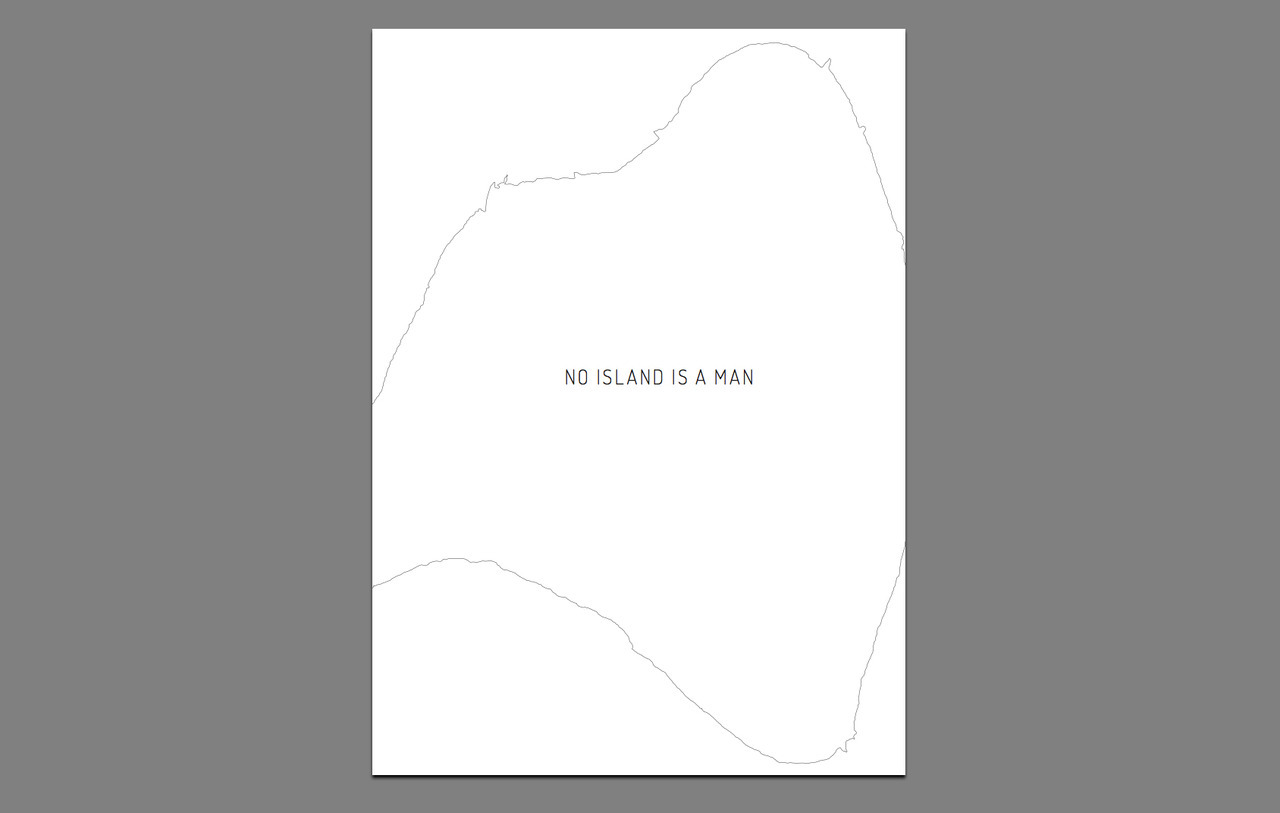
Andrew Ranville’s show of work created on Rabbit Island is now open at the DeVos Art Museum on the campus of Northern Michigan University. The exhibition is curated by museum director Melissa Matuscak and will be on display until December 14th. This represents the inaugural annual show of work produced by artists on Rabbit Island.
The accompanying exhibition catalog contains discussion of Ranville’s work by the artist as well as essays contributed by curator Melissa Matuscak, art historian and writer Nadim Julien Samman, and Robert Gorski. A limited edition handmade catalog with laser-cut hardwood binding has been created to celebrate the Rabbit Island + DeVos Art Museum collaboration. More information on this edition of 50 will be available soon. Below is a .PDF version of the text.
+ No Island is a Man: Exhibition Catalog
Just as John Donne reported his discovery—that “no man is an island, entire of itself,” but “a piece of the continent, a part of the main”— so could Thoreau announce that “the smallest stream is a Mediterranean sea.” In the particular, macro potential is revealed. Comprising just 90 acres of undeveloped land surrounded by 31,700 square miles of water in Lake Superior, Rabbit Island is a utopian attempt to colonize our imaginations. In establishing this project the artist Andrew Ranville and his collaborator Rob Gorski stake their claim to an ancient Western cultural tradition—one that invokes the island topos to negotiate relationships between the real and the imaginary, utopia and dystopia, selfhood and otherness, center and periphery. In so doing, the Rabbit Island residency also deploys the trope of the shipwrecked sailor, separated from his contemporaries, who must make the world anew. How the world is (re)made—which elements are to be carried over from the past and which are to be discarded—constitutes the moral or political import of productive isolation. - excerpted from the catalog essay Future Islands by Nadim Julien Samman
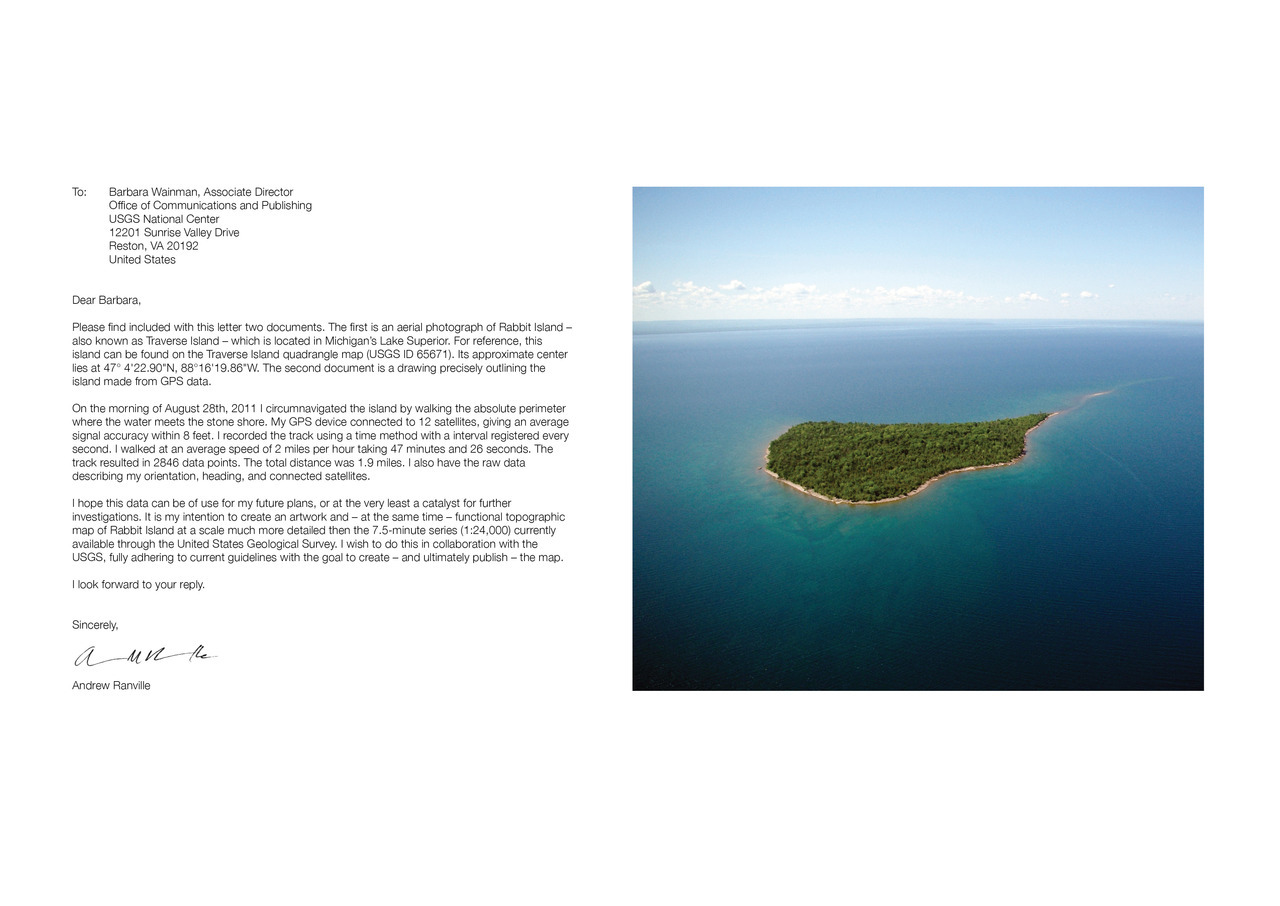
+ Marquette Monthly published an article in the September issue about Andrew Ranville’s upcoming show featuring island-specific work titled “No Island Is a Man” at the DeVos Art Museum in Marquette, Michigan. (Opens Sept. 14th). It doesn’t have quite the same patina online as it does in print but the copy is the same. Thanks for taking time time to write this Kristi.
+ Treehugger posted a piece by Jaymi Heimbuch about the evolving island residency and the beautiful mini-doc made by Collin McCarthy of the Cabin-Time group. Check it out. Jaymi is a San Francisco-based writer, Green Technology Editor @treehugger and conservation photographer. Thanks Jaymi.
Cabin-Time x Rabbit Island mini doc by Colin McCarthy. Probably going to win at Sundance.