Congratulations 2026 Residents
The Rabbit Island Residency is pleased to announce the selection of three residencies for its 2026 program. Each residency will be supported by an unrestricted honorarium of $4,000 USD, made possible by grant funding and generous donor contributions.
Somto Ihezue
Shoko Tamai
Milah van Zuilen
Below are the biographies, artist statements, and proposals from our incoming residents. While these ideas may evolve as the artists immerse themselves in island life, we look forward to sharing their research and expanding the Rabbit Island narrative through their work.
Since 2011, the Rabbit Island Residency has supported 52 residents and over 95 collaborators. Their work has fostered a diverse range of artistic expressions that critically engage with conservation, culture, and our relationship with the environment. We are confident this year’s cohort will continue this tradition, contributing vital perspectives to these ongoing dialogues.
The selection committee sincerely thanks everyone who applied to the 2026 Open Call. The applicant pool was exceptional, and while we could not award more positions, we are honored to welcome Somto, Shoko, and Milah to the island this season.
Rabbit Island 2026 Residency Selection Committee
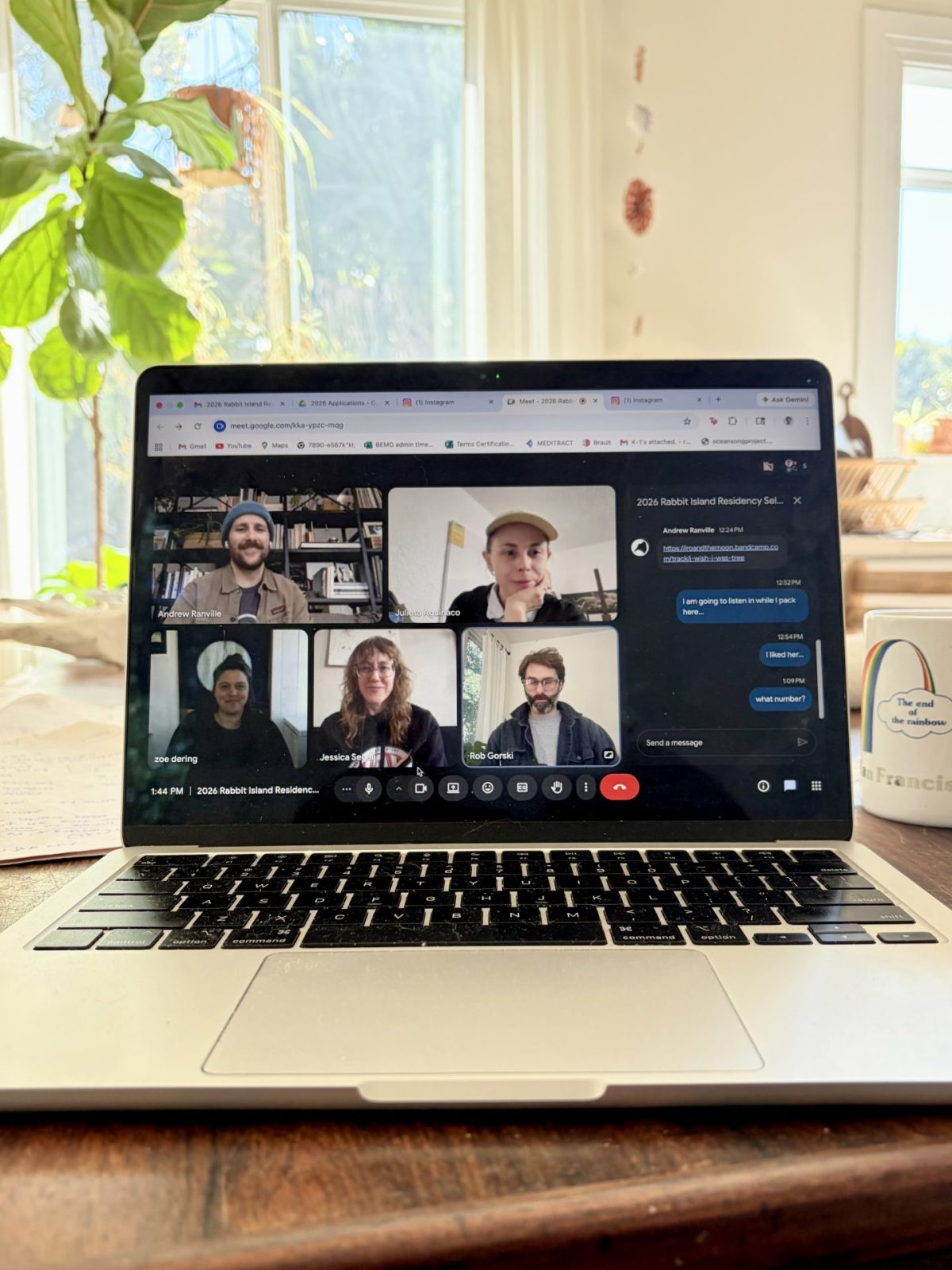
Julieta Aguinaco, 2017 Resident, Artist
Zoe Dering, Artist/Ceramicist
Jessica Segall, Artist
Rob Gorski, Cofounder/President
Andrew Ranville, Cofounder/Executive Director, Artist
Somto Ihezue
Biography
Somto Ihezue is a writer and filmmaker. He is an MFA fellow in Creative Writing at the University of Maryland. His writing begins at the intersection of boyhood, land, disruption, and joy in Igbo communities.
His work has been a finalist for the Nebula Award, the British Fantasy Award, the ALCS Tom-Gallon Trust Award, and has appeared in Clarkesworld, POETRY, Uncanny, Strange Horizons, Beneath Ceaseless Skies, Sauúti, and others. He has received residencies and fellowships from the Kimmel Harding Nelson Center for the Arts, Tin House, Clarion West, Sundress Academy for the Arts, Good Hart, and more. He was assistant editor of the Publishing Taught Me Anthology (SFWA & NEA) and co-editor of Will This Be a Problem? The Anthology.
Artist Statement
Through stories, I explore how environmental injustice intersects with histories of exclusion. Who has access to land? Who is displaced when water rises? Who gets to belong?
"Unless you know the context of a conversation, you might not know if we are speaking about our body or our land. You might not know which is injured, which is remembering, which is alive."— Natalie Diaz.
My work holds demands: to enshrine the stories of longing bodies, stories where the land does not reject them but holds them in tenderness. Stories where nature, like queerness, is wild, fluid, and boundless. A demand to not just understand, but to believe that the land is not just a place, and a river is not just water; it is memory and being. In my work, I refuse to separate the ecological from the sacred.
In my stories, landscapes shift, the earth rebels, and characters navigate both ecological and societal collapse; exploring how climate disaster mirrors colonial disruption, how displacement is not just a result of rising waters but of histories of extraction and erasure. My work imagines futures where the shorn invent new ways of living, where othered and displaced bodies find belonging in rewilded worlds, insisting that neither identity nor earth is easily erased.
Proposal
I intend to approach my work on Rabbit Island as dialogue. I am interested in listening: to the landscape and the ways scientific observation attempts to translate nonhuman life into legible forms. My practice is rooted in attention to bodies and lands as archives, and this residency offers an opportunity to expand that lens beyond cultural memory into ecological memory, where time operates at scales that resist human urgency.
I am particularly drawn to Rabbit Island, and by extension, the natural world, as a site where injury and regeneration coexist. Engaging with ongoing ecological studies of disturbance, succession, soil, water, and climate, through storytelling, I would explore how scientific language describes loss and change, and the moments where said language strains. I am interested in what is unquantifiable. The emotional residue of clear-cuts. The spiritual weight of old-growth. The queer temporality of ecosystems that stall or refuse linear recovery.
A potential project will take the shape of a hybrid text: part ecological gloss, part speculative fragments, part history. These pieces would imagine the forest as a body that remembers, holding traces of extraction, fire, human intervention, alongside care and persistence. Rather than centering human protagonists, the work may follow watersheds or fungi as narrative agents, asking how displacement operates across scales and species. What does belonging mean in a protected forest? Who is deemed native, invasive, or expendable? This work would extend my ongoing interest in the inseparability of the ecological and the sacred.
On Rabbit Island, I hope to let the landscape complicate, while challenging my thinking and writing process. The stories that come forth would be shaped by proximity, failure, listening, and the slow ethics of staying with the land long enough for it to answer back.
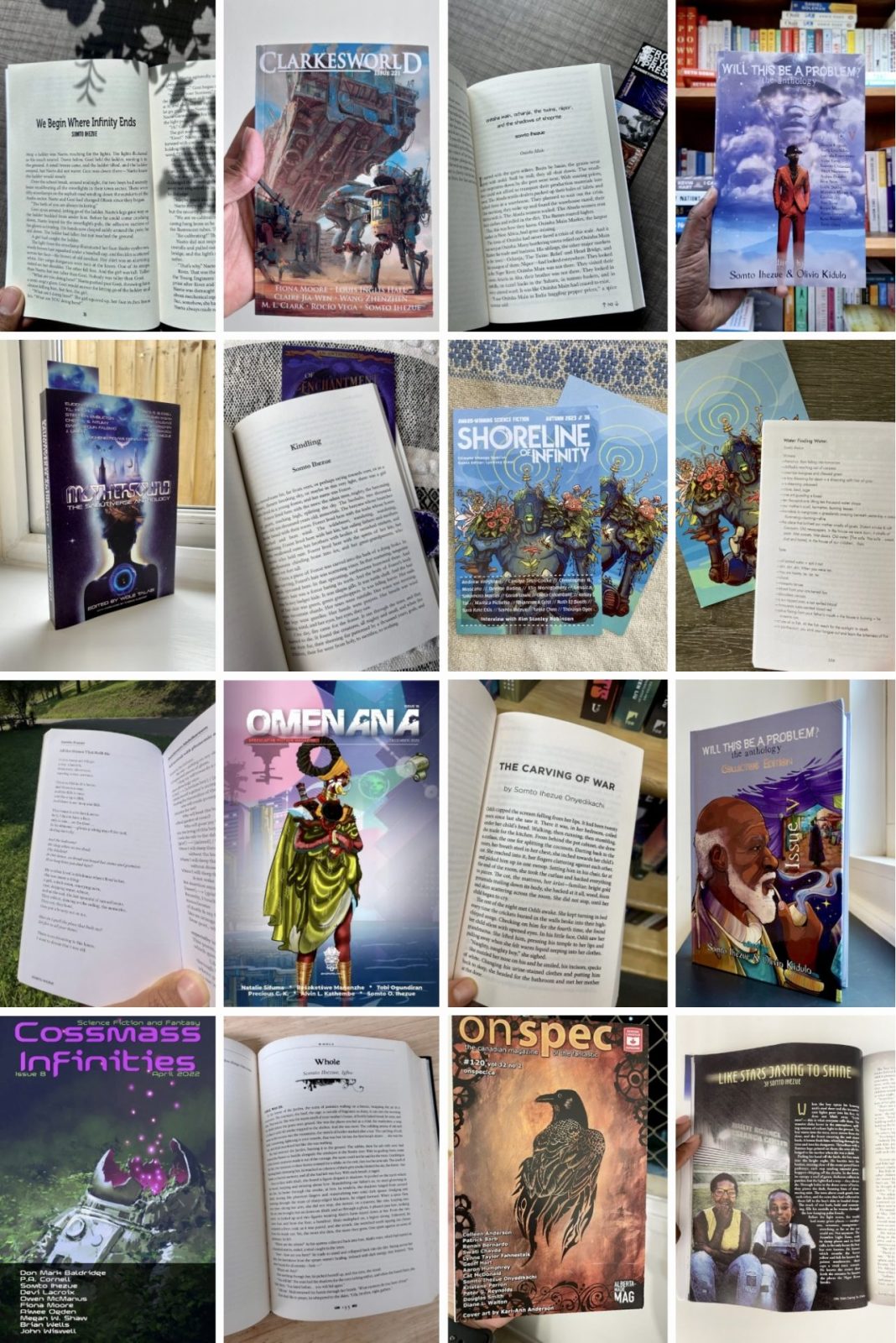
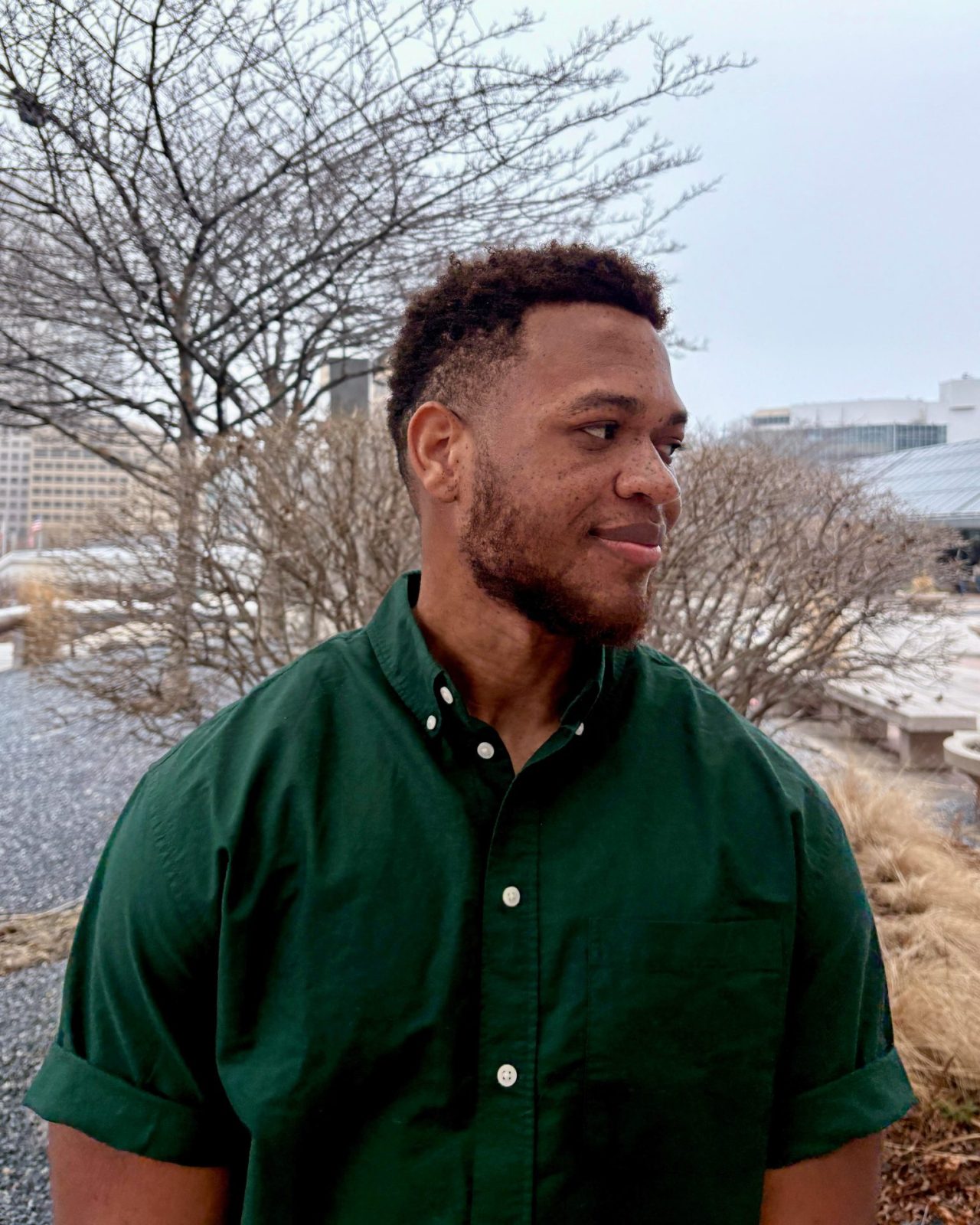
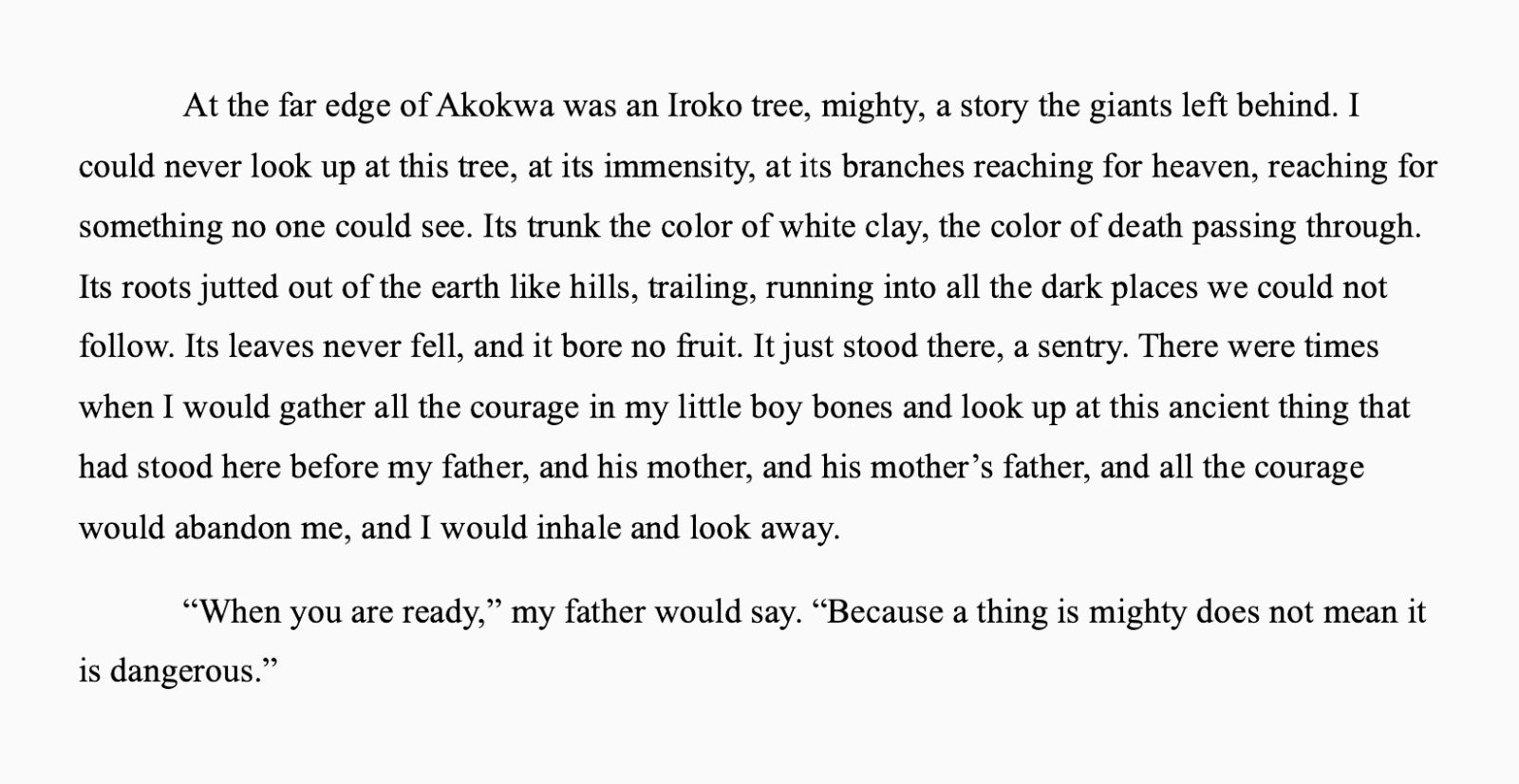
Images: Somto's writings in various publications. Portrait courtesy of the artist. Excerpt of Somto's "When Trees Laugh, It Sounds Like This".
Shoko Tamai
Biography
Shoko Tamai is an award-winning choreographer, dancer, and director whose work blends ballet, contemporary movement, and martial arts to explore mythology, human connection, and environmental consciousness. She began formal training at age two and studied at Yumi Classical Ballet Studio, the Central School of Ballet, Royal Ballet in London, the American Academy of Ballet.
Tamai has performed internationally with companies including Dance Theatre of Harlem, Tokyo Ballet, Cirque du Soleil, and Semperoper Dresden Ballet. She received the Solo Seal Award from the Royal Academy of Dance in London, was a finalist at the World Ballet Competition, earned the Merit Award at Premio Capri Danza International, and was nominated for Outstanding Choreography for The Tempest at the New York Innovative Theater Awards. She was the first female choreographer commissioned for the Isha Foundation’s Maha Shivaratri celebration and has performed at the Joyce Theater, Lincoln Center, and Jacob’s Pillow. Her work includes the Edinburgh Festival Fringe and site-specific performances like NAUM, an immersive work staged both underwater and on land.
Since 2017, she has led Ninja Ballet, merging dance, film, and ritual storytelling. Her 2024 debut dance film, Flow, received recognition at the Berlin Kiez and Sarajevo Fashion Film Festivals. Across these mediums, Tamai continues to examine cultural memory, spirituality, and humanity’s relationship with the natural world.
Artist Statement
Through my art, I seek to awaken mindful awareness, guiding us into deeper intimacy with ourselves and the natural world. Ballet was once my meditative refuge, but the professional pursuit of “perfection” led me into a darkness I had to transcend. Through martial arts, I learned to embrace imperfection, transforming each movement into a lifelong ritual of heart purification. Now, I strive to dissolve the invisible walls between dance languages and liberate the suppressed wildness and sensual truth of the raw self.
I see myself as a translator of body language, bridging ancient wisdom with the present moment. By gathering movements from fading indigenous traditions—from Siberia to the Ainu—I work to recover the Body Poems forgotten by modern society. Rooted in deep listening to the Earth, I bridge the movements of our ancestors with the rhythms of today’s world, translating the pulse of living land into dance as a sacred offering.
In a fragile future where humanity could vanish like the dinosaurs, I move so this world might welcome our presence. This is my lifelong devotion: to honor all life and affirm dance as a vital path toward harmony and survival.
Proposal
Where I came from, the classic Japanese language my grandmother carried is dying. In her will, her YUIGON, I saw the character 體 (body). Today, we use 体, uniting "person" with "tree root." But the ancient 體 is different: the radical 骨(bone) on the left meets "origin" and "abundance." I realized I didn't truly know my body because I have spent my life facing 体. Now, I want to rediscover myself through 體—a rebirth where bone awareness makes the body "abundant." On Rabbit Island, I want to discover what it means to understand my sacred form this way. I am curious how each bone represents our humanity; in the end, we are only “bone to ashes.”
To explore this, I will research the movements of Rabbit Island’s flora and fauna. My process follows Hayao Miyazaki’s philosophy of drawing “from the bone,” understanding internal weight and anatomy rather than surface skin. You move from the center and the spine, feeling core energy before detail. Using thousands of photos and drawings, I will collage these observations, for example, half-worm and half-human. By researching how a worm moves and collaging it with a human walk, or fall… I will develop movement to become these beings. This is my way of expressing the “sphere of life", reconstructing movements to develop a new dance technique.
I approach this residency with a disciplined structural intent, yet I will leave room for the land to breathe through me. My time will culminate in a "Body Poem" book of collages and dance methods, which I hope to publish alongside a digital film on a USB card. The land will determine the book; in an interactive performance, I will project images and interpretations from the land physically into the space, as if the audience and I are reading the book together. Through this book, film, and performance, I want to build a path for land stewardship, using my body as a translator for the island’s ancient and living forms.
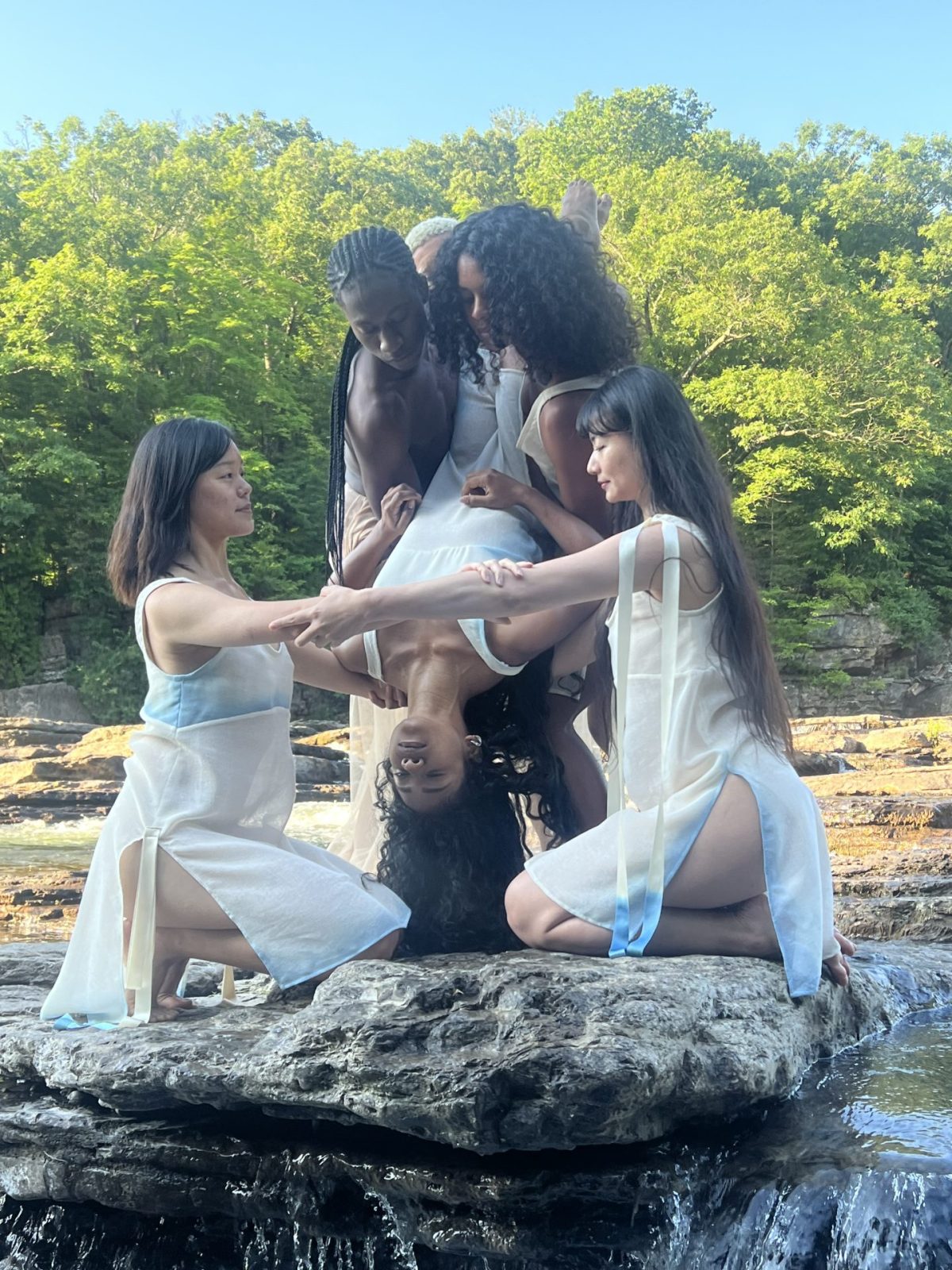
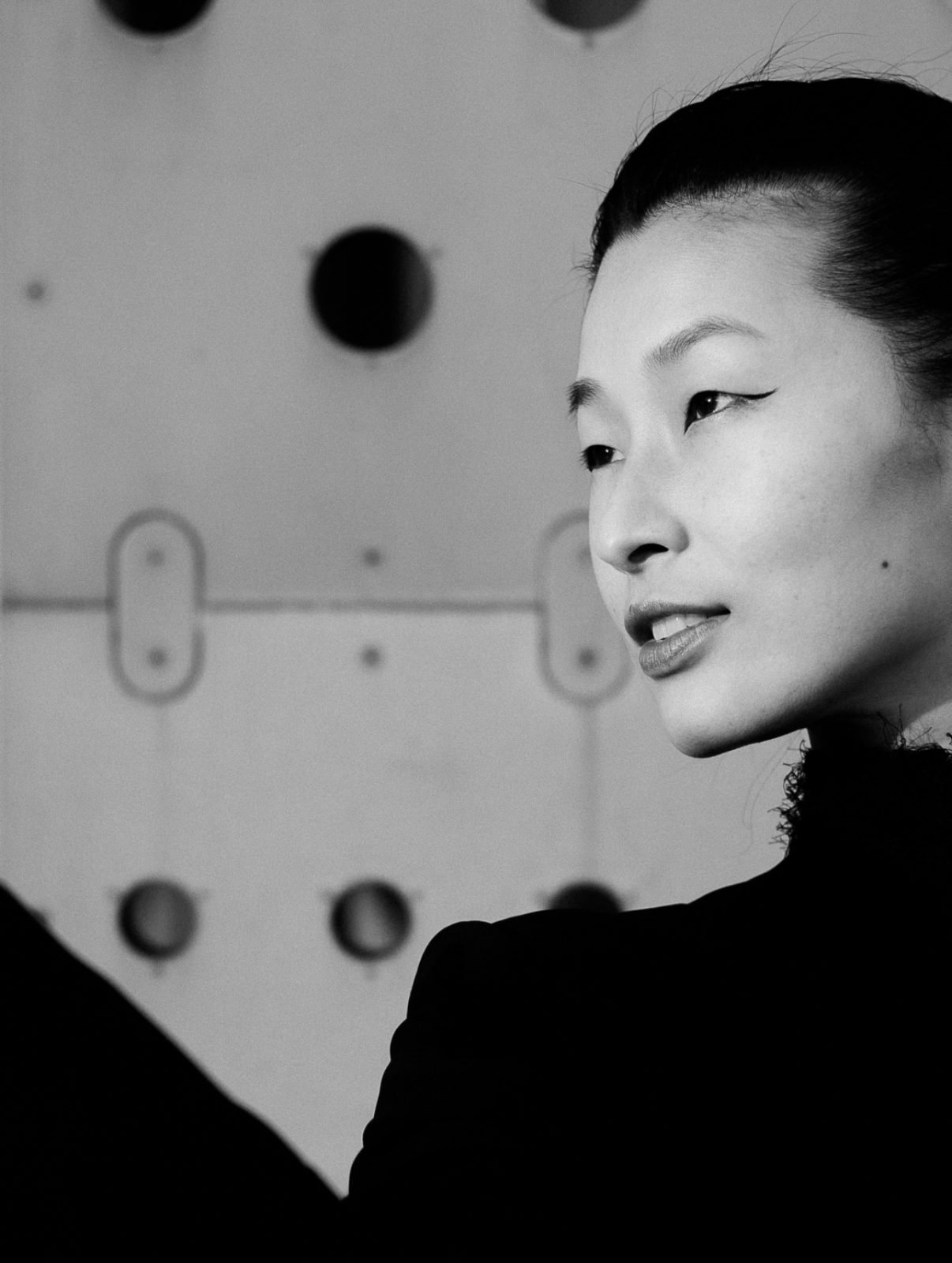
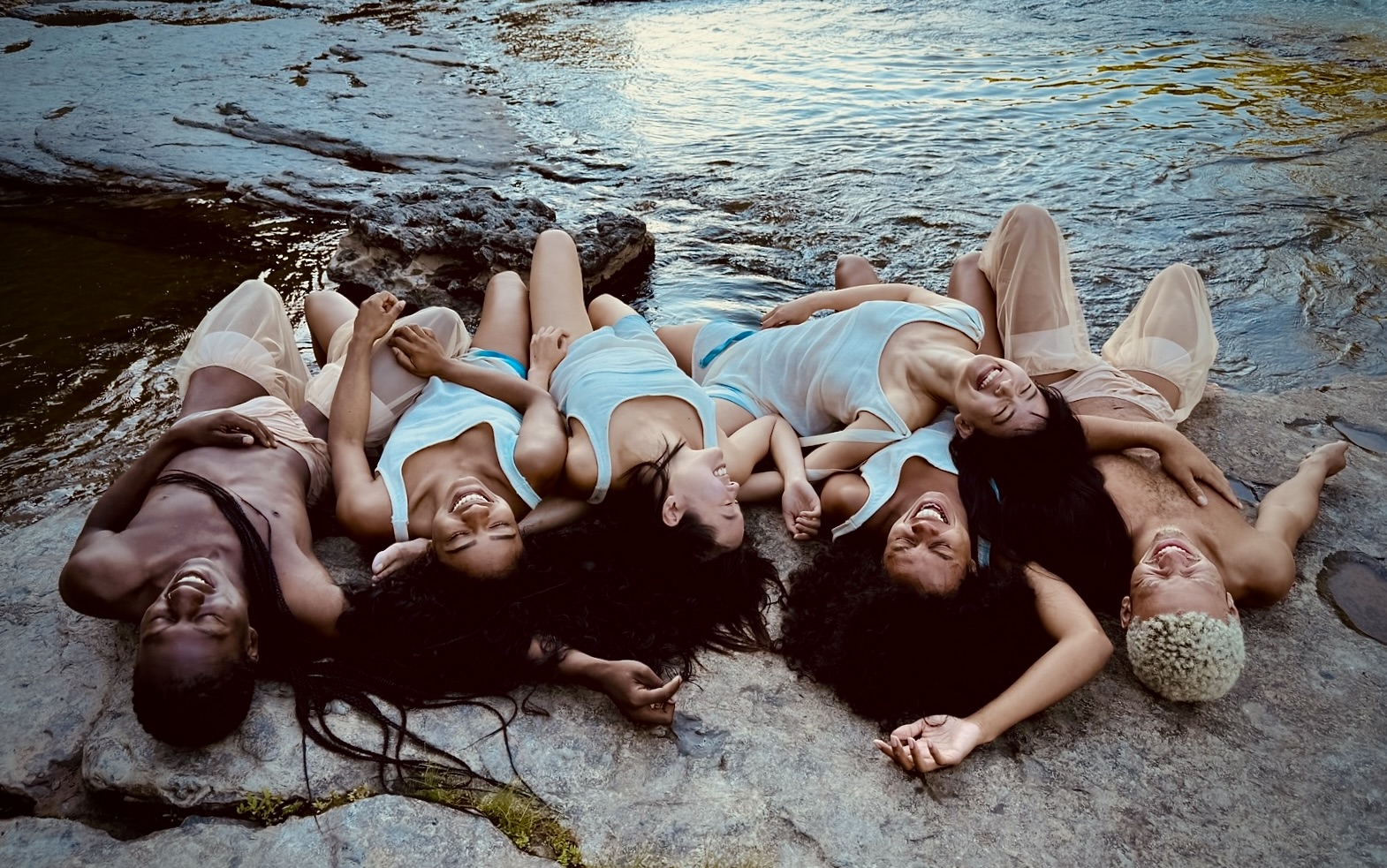
Images: Film stills from the Shoko's 2024 film, Flow. Portrait courtesy of the artist.
Milah van Zuilen
Biography
Milah van Zuilen is a visual artist and forest ecologist in training based in Lunteren, the Netherlands. She works with materials gathered during fieldwork, creating projects in dialogue with landscapes and their ecologies.
After graduating from the Fine Arts & Photography Honours Programme at Willem de Kooning Academy in Rotterdam, her graduation project Terrafuturism received the Ron Mandos Best of Graduates Award and was included in the collection of Museum Voorlinden. Her work has since been exhibited in institutions in the Netherlands and across Europe, including Museum Arnhem, Rijksmuseum Twenthe, Allard Pierson Museum and CODA Museum.
Alongside her artistic practice, Milah pursued a Pre-MSc in Forest and Nature Conservation at Wageningen University & Research and completed an internship at National Park De Hoge Veluwe. She is also co-founder of JARO, a space for ecology-related artist residencies in the Czech Republic.
Artist Statement
Both as a visual artist and a forest ecologist in training, I aim to bend the disciplines of art and ecology closer together. With fieldwork as a fundamental method, I explore the human urge to understand, categorise and divide landscapes. Also central to my work is the square, a shape that characterises this human perspective on the land.
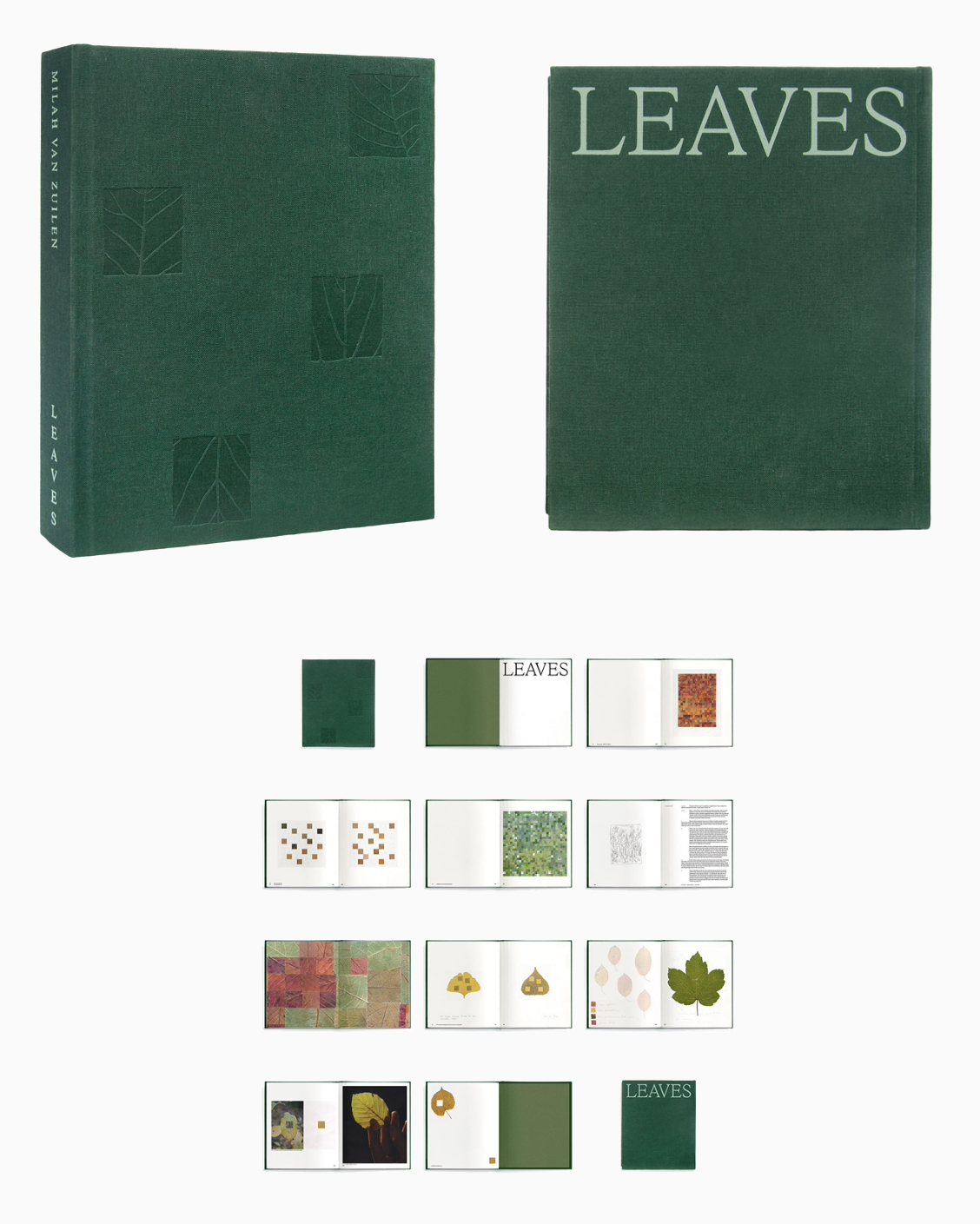
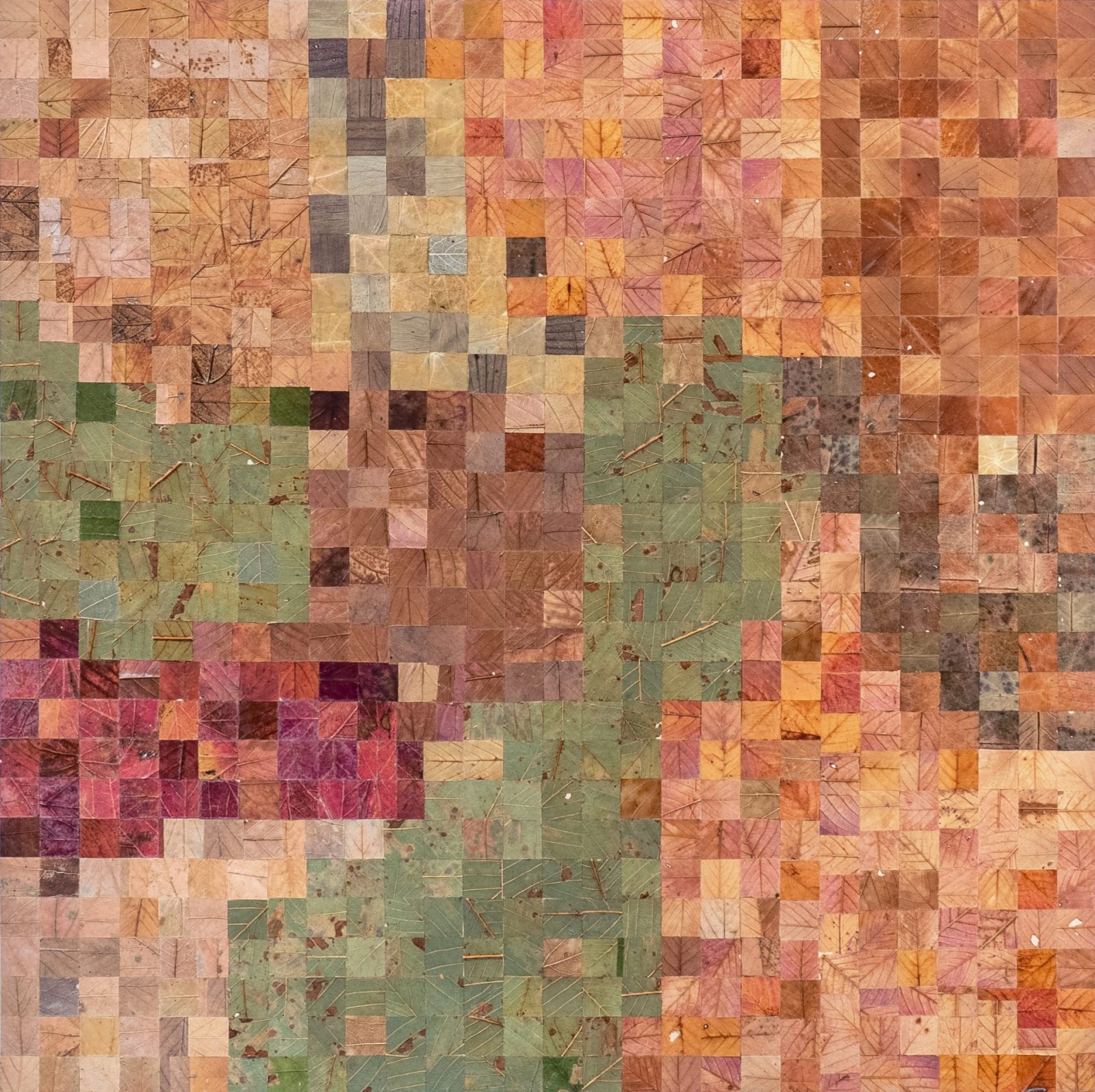
In current projects, I gather and rearrange leaves and other plant materials into squares and grids, referring to the grid-like structures found in taxonomy, cartography and monocultural land use.
Proposal
A human, square, and grid-shaped order is often imposed onto landscapes. Nature as a whole is, still, frequently regarded as ‘other’ than ‘us’.
Fascinated by the act of ‘othering’, I would like to explore the act of ‘islanding’ as an alternative form of isolating. One that is more inclusive, grounded and affectionate.
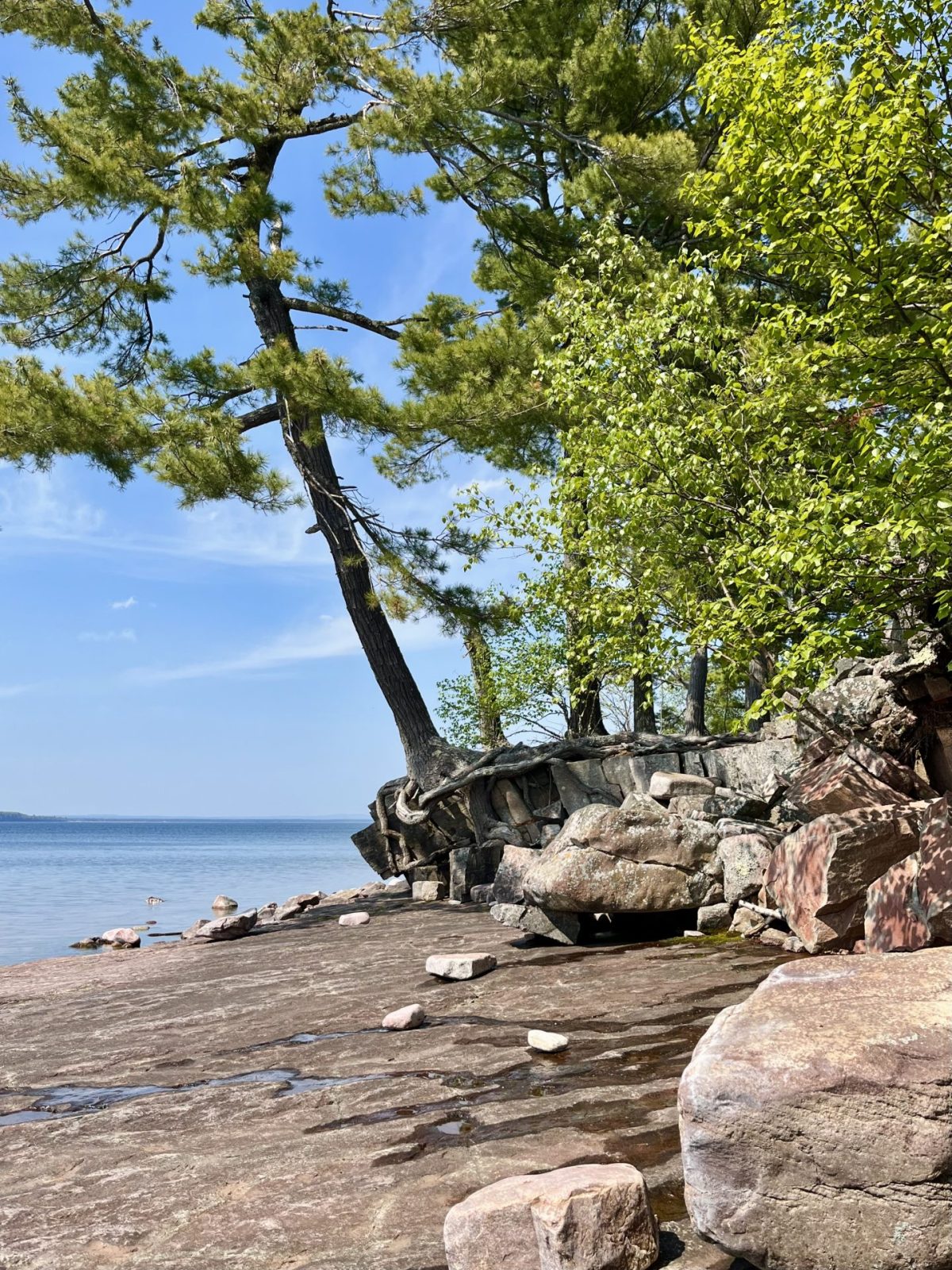
Embracing the island’s remoteness as a sanctuary, a blob, that holds not just individually distinguishable species, but also the many symbioses between them.
My plan is to ‘island’ (read; ‘lovingly isolate’, or ‘pocket’) my scientific and artistic observations. To make a self-contained unit of assembled findings, similar to a small, site-specific pocket guide. Through notes, documented actions and subtle re-arrangements, I would like to capture a conversation between a square’s seemingly static lines and Rabbit Island’s ever-changing landscape.
During my residency, I would like to:
- create a theoretical and visual taxonomy of the island’s flora and fauna
- draw links between the island’s taxa, paying attention to symbioses, overlaps and subtle ecological entanglements
- gather and dry material in a self-made plant press (carefully and selectively, with respect for the island's species)
- research existing literature on the island’s ecologies, allowing scientific knowledge and embodied observation to inform one another
- assemble my notes, documentation and material findings into a pocket-sized Rabbit Island booklet – similar to a little field- or flora-guide (to be turned into a small printed edition after the residency)
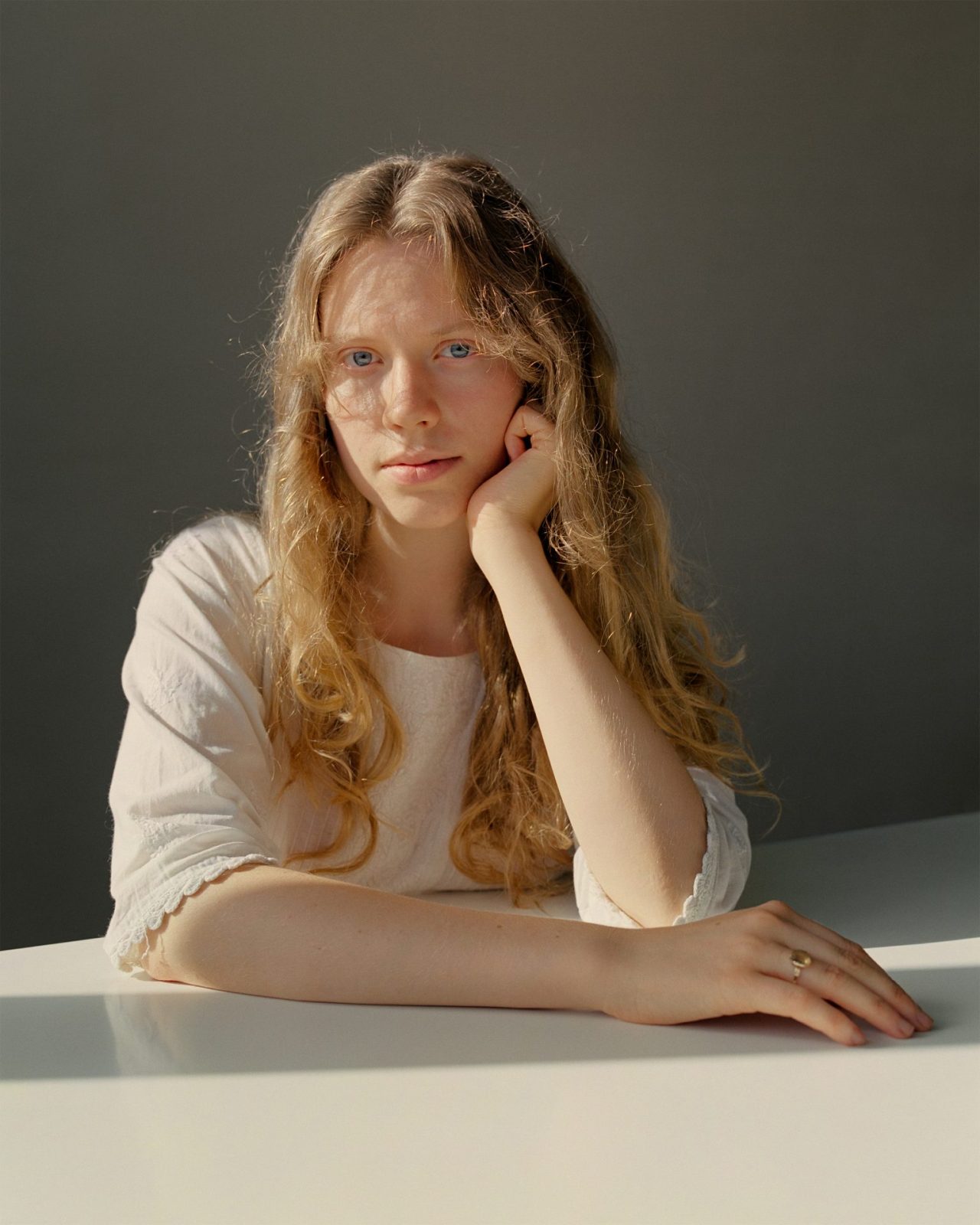
Images: The artist's book "LEAVES", published in 2025. Milah's portrait, courtesy of Wouter le Duc. The artwork "Ten (or so) trees around the village".
About the Rabbit Island 2026 Residency Selection Process
We recently awarded our 2026 Residencies and will be announcing the selected applicants in the coming days. The 431 applications to this year’s open call encompassed what we believe to be the largest diversity of perspectives, disciplines, and ideas to date. The 2026 Selection Committee worked collectively to define the criteria it would use in their selection process and landed on a trifecta that highlights the island, the audience, and the artist—and how each of these would be informed, challenged, and impacted by the proposed residency. They also placed significant weight on the quality of work samples and artist statements.
Following the application deadline all 431 applications were made available for review to the five member Selection Committee. Each member was given approximately 86 applications to be lead reviewer on, while all applications were made available for review by the entire committee. From February 25 – March 5, 2026, members of the Selection Committee reviewed all 431 applications in detail. Together they read each artist statement and proposal, reviewed the work samples, and visited the links provided in each submission. At the end of this first round of review, an initial shortlist of 46 exemplary applications was created.
These 46 applications were compiled for the Selection Committee to review, with the opportunity to add any other applications they thought needed a closer look. Over the course of four and half hours the committee met virtually to collectively review these applications. At the end of their discussion the committee had narrowed this initial shortlist of 46 applications to 20 shortlisted applications. Out of these 20 applications each member ranked the 10 applications they felt were the strongest. These votes were tallied and a finalist list of 10 applications were chosen and interviewed. After the interview process, an extended deliberation by the Selection Committee took place, followed by a ranked-choice vote to finalize the selection. The result was three successful applications being awarded a 2026 Rabbit Island Residency. The awarded residencies will be announced in the coming days.
Rabbit Island 2026 Residency Selection Committee
Jessica Segall, Artist
Julieta Aguinaco, 2017 Resident, Artist
Zoe Dering, Artist/Ceramicist
Rob Gorski, Cofounder/President
Andrew Ranville, Cofounder/Executive Director, Artist
The 2026 Rabbit Island Residency Call for Applications received 431 applications featuring artists based in 40 different countries. Thank you to everyone who spent time crafting their statements, proposals, and submitting work samples. Over the past several weeks the Selection Committee reviewed all the applications in detail. The committee recently gathered in an extended virtual discussion to narrow down the submissions to a shortlist and is currently confirming a finalists list. By March 14-15, all applicants will be notified of their application status, and finalists will be contacted to schedule their interview times. Additional details about the selection process will be shared in a few days and awarded residencies will be announced in early April.
The 2026 Rabbit Island Residency Program is now accepting applications. This year we anticipate awarding three residencies that will take place between June and September. With the support of grants and continued contributions from donors we are excited to support awarded residencies with the following:
- $4,000 (USD) unrestricted honorarium
- 3 week residency on Rabbit Island
- Exhibition in the annual Rabbit Island publication and online archive
- Connections to partner institutions for exhibition and performance opportunities
- Mainland housing as needed in the Keweenaw Peninsula, Michigan
A comprehensive Application Guide, Frequently Asked Questions, and application form are available at the Artist Residency page.
The deadline for application is February 22, 2026, at 11:59pm EST.
We look forward to your submissions!
Congratulations 2025 Residents
The Rabbit Island Residency is pleased to announce the selection of three residencies for its 2025 program. Each residency will be supported by an unrestricted honorarium of $4,000 USD, made possible by generous grant funding including a Core Grant from Ruth Arts, and donor contributions.
Kara Lynn Bressler
Anastasiya Tarasenko & Alexander Costa
Dayton Hare
Below we share the brief biographies, along with the artist statements and residency proposals from the residents' applications. We acknowledge that proposal ideas may evolve as the residents experience life and work on the island. We look forward to working with the residents, sharing their experiences on the island, and expanding the story of Rabbit Island through their research and work.
Since its inception in 2011, the Rabbit Island Residency has supported the 48 residents and over 90 collaborators. These residencies have resulted in a diverse range of artistic expressions that critically engage with issues of conservation, culture, and our relationship with the natural world. We are confident that this year's residents will continue this tradition and contribute valuable perspectives to these ongoing dialogues.
The selection committee extends its sincere gratitude to all who applied to the 2025 Rabbit Island Residency program. The pool of applicants was exceptional, and while we regret not being able to offer additional residencies, we are honored to be welcoming and working with Kara Lynn, Anastasiya and Alexander, and Dayton this summer.
Rabbit Island 2025 Residency Selection Committee
Ale de la Puente, 2024 Resident, Artist
Tanja Geis, Artist/Curator
Dehlia Hannah, Curator/Writer
Kelsey Issel, Curator/Producer
Rob Gorski, Cofounder/President
Andrew Ranville, Cofounder/Director, Artist
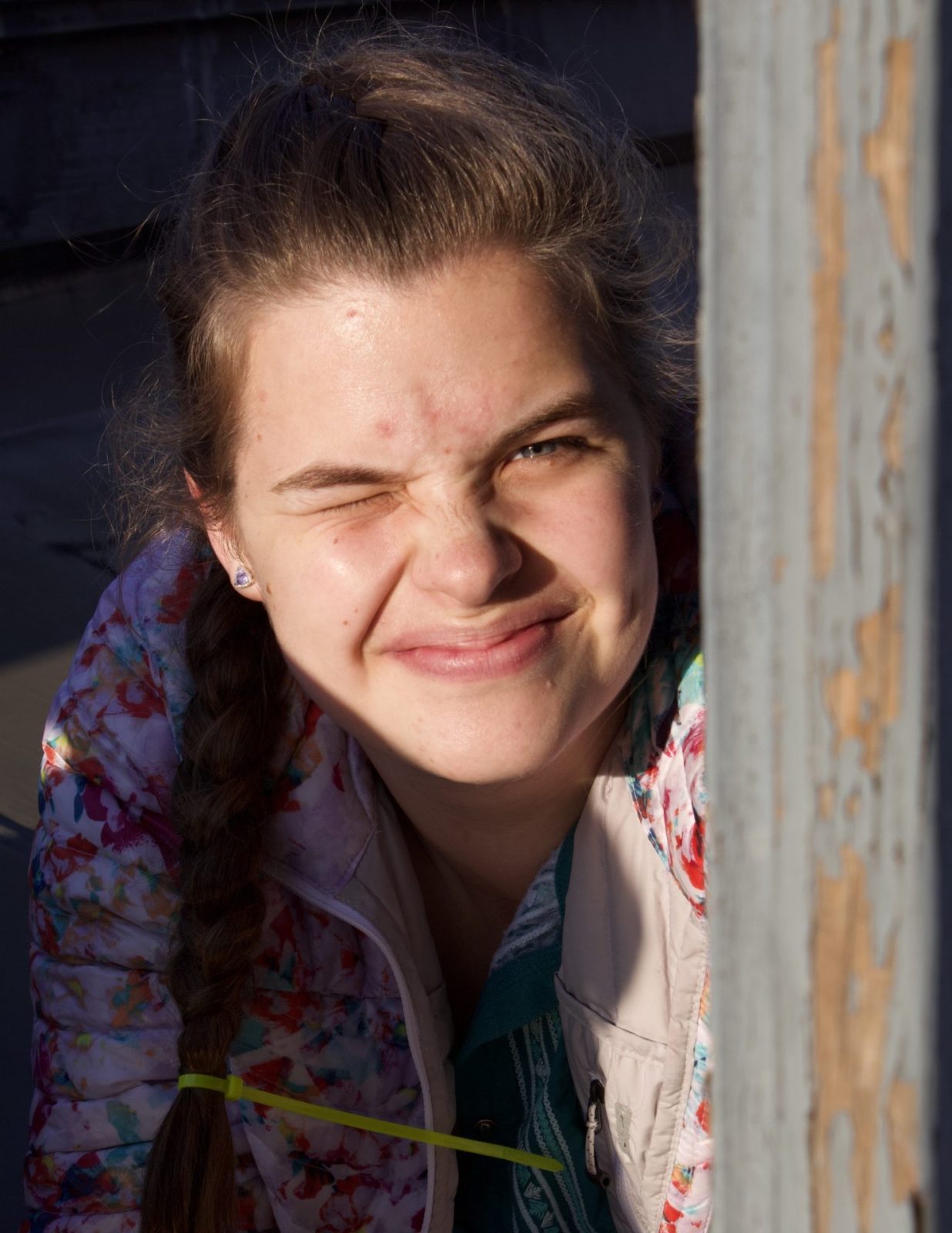
Kara Lynn Bressler
Biography
Kara Lynn Bressler is a listener, light observer, geo-typographer, outdoor educator, technologist, and visual artist. Kara grew up in Southwest Florida and currently lives in Los Angeles, California, where she works as an animation lighting artist for feature films like The Wild Robot while running her own multimedia art practice, collaborating on font-based research with interdisciplinary researchers including members of the Utah Diné Bikéyah, Lassen Volcanic National Park, The Brooklyn Rail, and MIT Media Lab.
Kara holds a Bachelor of Science degree in Engineering, Computer Science & Visual Arts from Princeton University, where she also worked as a Leader Trainer and Outdoor Educator for Outdoor Action.
Artist Statement
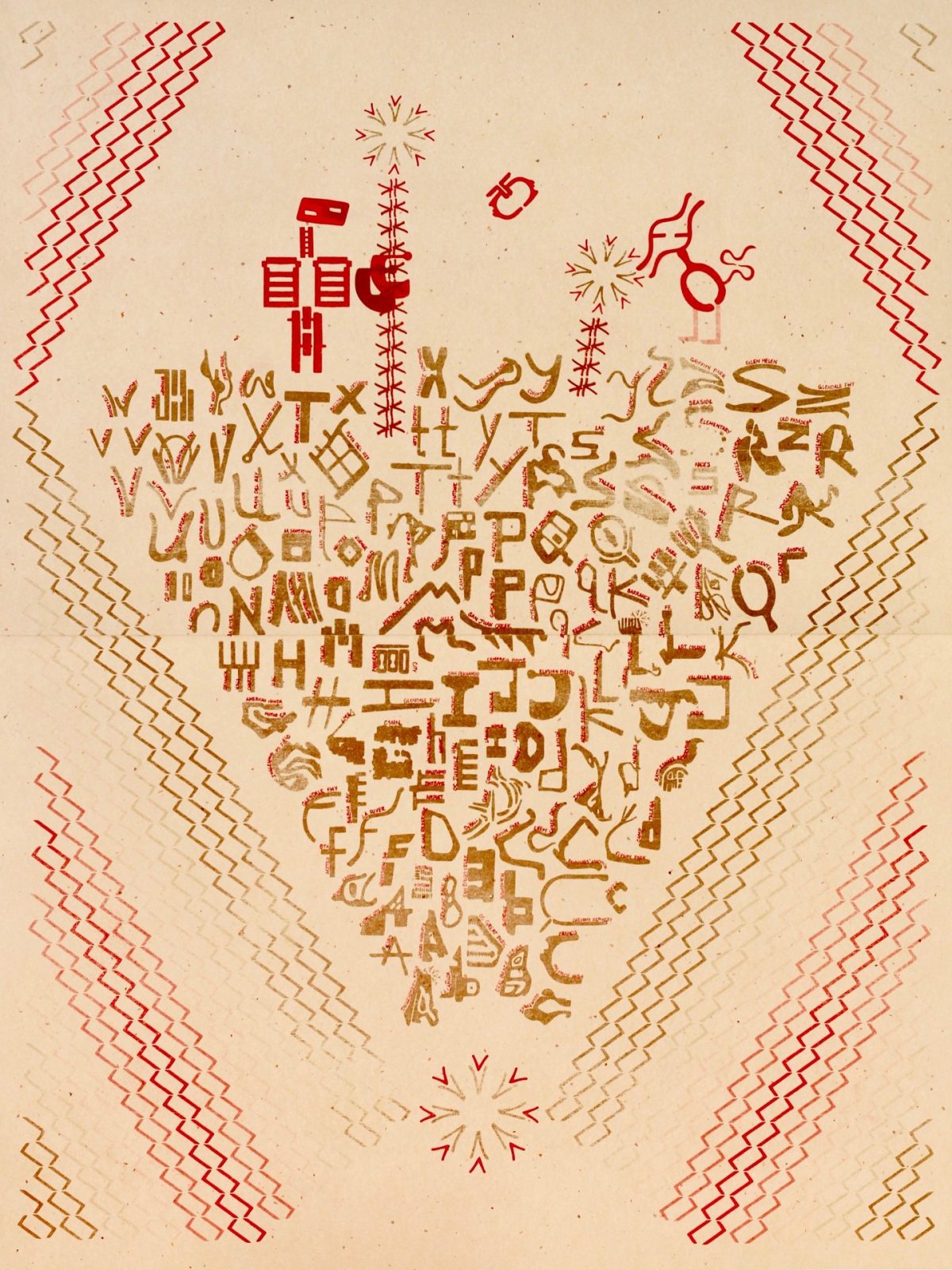
I often think about the elements of language—internally playing with letters and phrases, scanning my physical world for glyphs. My continued research practice of Topography Typography involves glyph detection and typeface creation from physical spaces, ultimately creating place-based fonts. It is my intent with these fonts to keep elements of the physical landscape in the text’s textural experience.
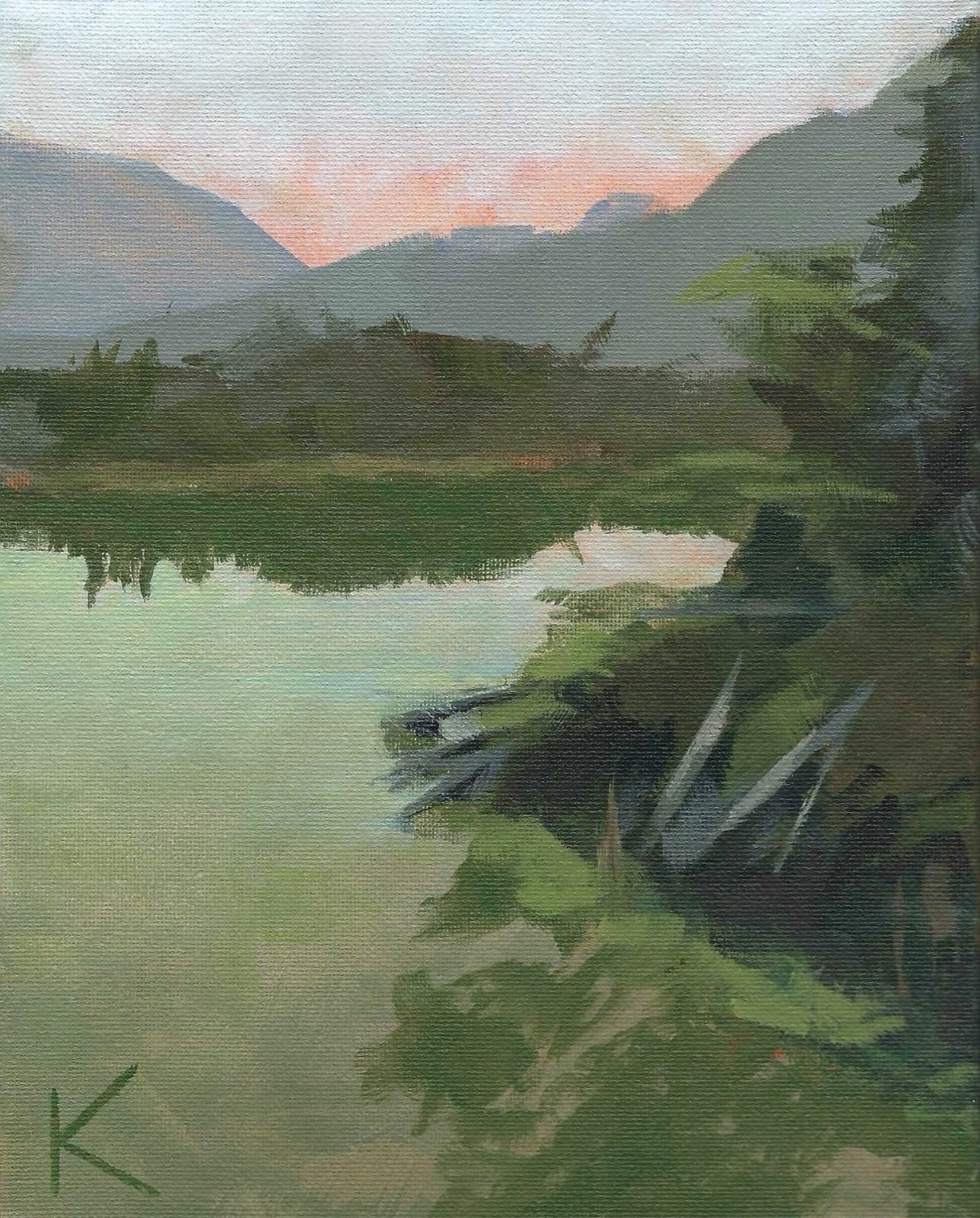
I enjoy watching light. My perception of light shapes my everyday perspectives and helps me feel grounded. I’ve trained my eye to focus on small details: light traveling through water creates dancing caustic envelopes, light hitting building windows creates warped reflections, and light piercing into internal spaces creates graphic shards. These moments are art. I plein air paint to watch how light affects value, composition, and mood while I connect with nature and my local community.
These graphic languages—of typography, of light—keep me searching. Using these languages to help me focus, I dive into intersections of nature, computer graphics, graphic design theory, and experiential education. I’m interested in examining visual and media theoretical patterns while locating and emphasizing poetic moments.
Proposal
For my artist residency, I propose a typographic exploration of Rabbit Island which likely includes:
(1) the completed Rabbit Island font,
(2) an abstract typographic map of the island,
(3) a daily routine of light observation, and
(4) a design for a postcard accordion book.
My continued Topography Typography practice has often used satellite imagery as a starting dataset from which I identify and curate geographic glyphs (geoglyphs) to form the basics of language for my place-based fonts. Often, the geoglyph boundaries I find are formed by human infrastructure.
On Rabbit Island, I would like to take the chance to find the elements of language in a place without these artificial boundaries. While I may still use satellite imagery to inform my search, I would like to find my typographic shapes in-person, in-situ, and on the ground. While on the island, I’ll curate a batch of found letterforms formed by local nature and light. I’ll create a plein air study at the location of each geoglyph, twenty-six in total, one for each letter in the alphabet.
These studies will end up taking the form of a postcard accordion which will also include a collection of my written thoughts about light—from personal, historical, and scientific perspectives—typeset in Rabbit Island. By the end of the residency, I’ll have a prototype design for the postcard accordion with the intention to print and circulate the small book after the residency. Keeping an element of the referent landscape in the visual building blocks of language, the Rabbit Island font will allow this space’s unique topography to remain at the center of the published message.
By examining this landscape through the lens of the basics of language, I hope to build paths for folks to reflect on the importance of deep observation, nature conservation, and land stewardship.
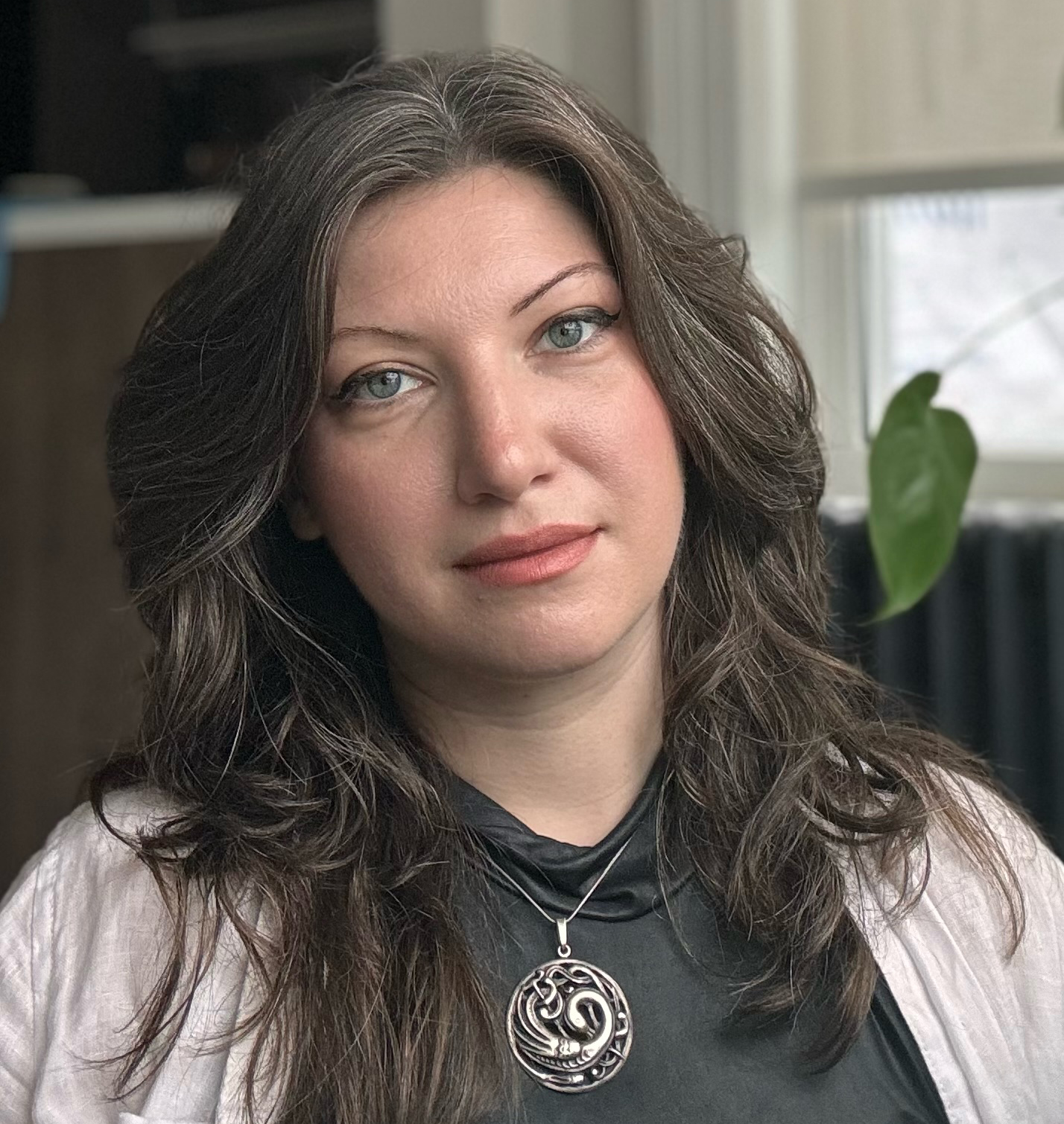
Anastasiya Tarasenko & Alexander Costa
Biography
Anastasiya Tarasenko is a painter based in New York City. She was born in the former Soviet Union, Ukraine, in 1989. Her family moved to the United States in the mid-90s. Anastasiya's collaborator, Alexander Costa, was born in Queens, New York, in 1987. He is Anastasiya's partner in life and muse. Alexander is a retired ballroom dancer and is a continual source of inspiration for Anastasiya, helping her generate complex poses and ideas for her paintings.
Anastasiya holds a MFA from the New York Academy of Art; has received international awards and residencies from 2016–present; been featured in numerous publications; exhibited internationally in group shows; and has had several solo exhibitions of her work in New York City and Boston.
Artist Statement
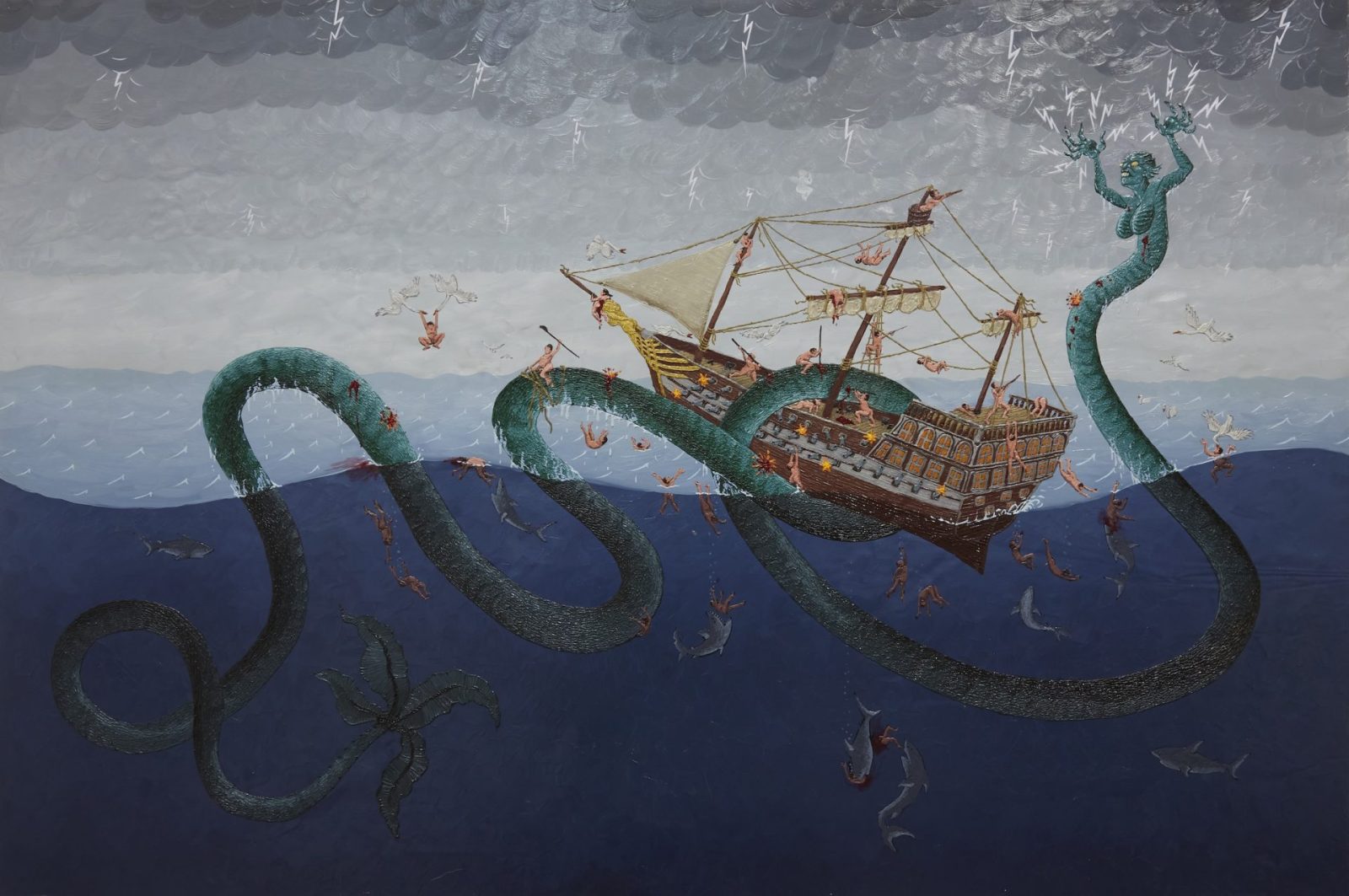
My work is at the intersection of my identities as an American, a Ukrainian immigrant, a Jew, and a queer woman storyteller. In my most recent body of work, and my work in general, can be best described as a form of complex world building. Dozens of small narratives are combined on a single panel to form a grand, gods-eye view.
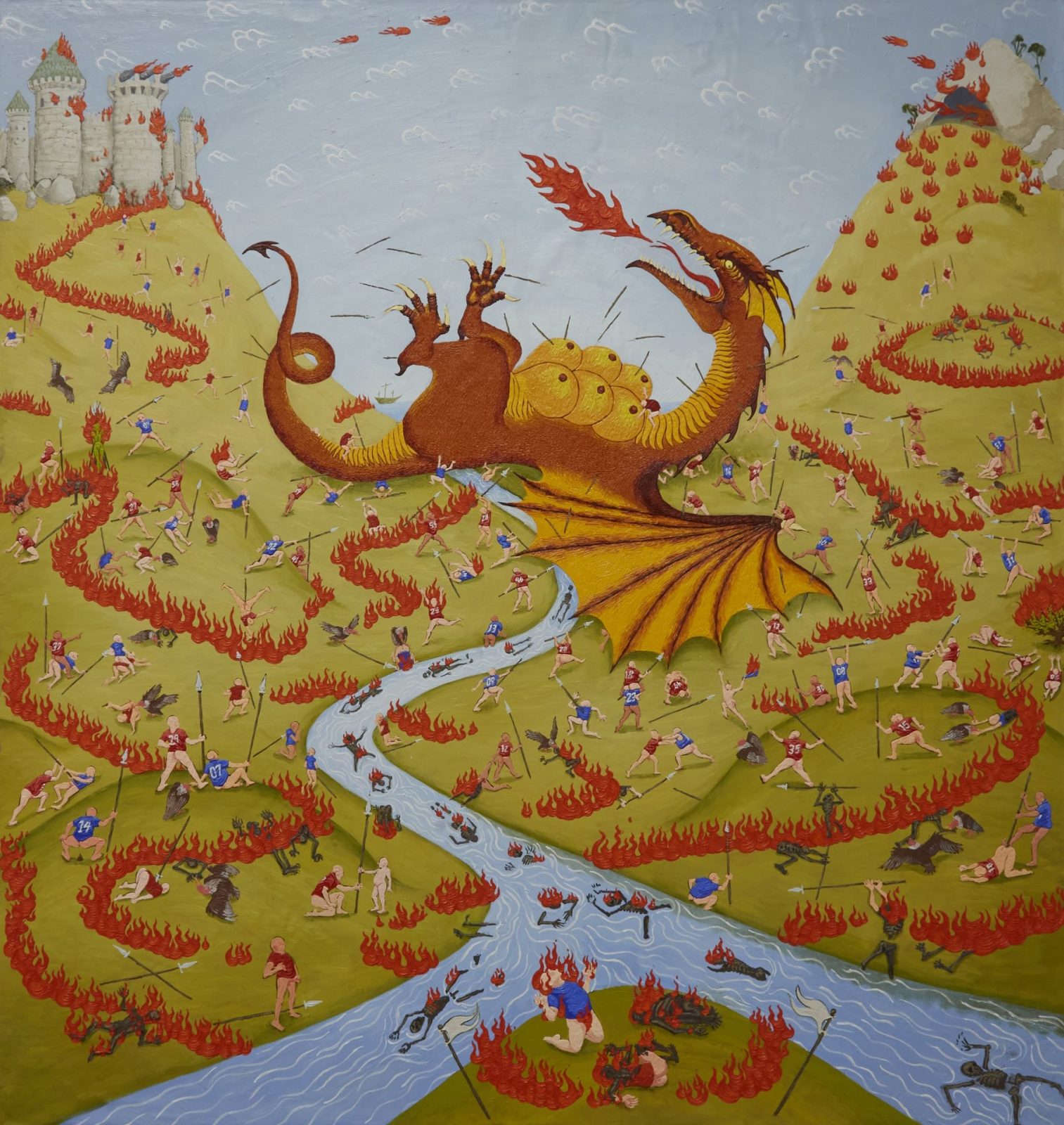
From a physical standpoint: they are highly textured oil paintings; touchable. They are precise yet reductive. I have resurrected an old painting medium, copper, which was used hundreds of years ago. Through it, I am able to achieve an enameled look with the paint while the visuals pay homage to medieval and renaissance imagery and motifs.
I take my time, I start with a sweeping landscape, or seascape. I paint my cast of characters like a director directing a play. They interact, often in unsettling ways, with each other and their environment. They laugh, they kill, they eat, they die. It is often difficult to distinguish any protagonists. Indeed, as in real life, there rarely are any.
Essentially, my paintings are a critical reflection of contemporary culture as it intersects with the universal and constant truths about the darker side of human nature. I use details of humor and whimsy, bodily function in all its ugliness. Taking a closer look is rarely boring. By combining ancient themes with contemporary ones, I strive to reinforce that history is always with us and within us. What drives us forward? What holds us back? And in what ways do we remain distinctly animal?
Proposal
I was born and raised in the cities, as far removed from nature as one can be. My world has been one of concrete, fences, clear delineations of where to go and what to do. I am both in fear and in awe of being alone in a place where no such clean distinctions exist. From my perspective, nature is a concept, one that I explore now in my paintings. It is precisely the tension between the “civilized” man and his animal nature that I find fascinating. Our bodies and minds evolved in the untamed wilderness and now we find ourselves within the confines of square walls physically, psychologically and socially. These thoughts have formed the basis of my art practice at its core. There is symbiosis and there is a war within us. We take advantage of nature’s gifts as we shirk our responsibility to maintain its equilibrium. Humanity feels like a swelling virus at times, seeping into every corner, turning over every stone on our planet in search of what it would benefit us. In my painting, St Georges vs. The Dragon, nature is represented by a great dragon being taken down by small, insect-like humans; swarming and taking her down. But it is to their detriment. The fire engulfs them too.
I operate under the greater historical context of painting. Landscape painting has always been a fascination to me, particularly because it encapsulates that which cannot be contained, nature itself. And then it is hung on the square walls of a private home, grand castle or museum. It’s as if both the painter and patron can say they have captured the sublime. An artist can spend a lifetime on this endeavor, collecting the sublime moments of nature, or at least attempting to. And I too have this same yearning, with magic both in the observation and the translation.
Alone on an island, although with everything equipped for my survival, still means a profound solitude in an environment that is merely hosting me like a small, fleeting insect. I am there and then I am not. What does it matter to the trees? To the water? And yet, the position there does present a rippling impact on everything around me. The leaves I displace by my footsteps, the dirty water I leave behind after showering, and even the traveling I do to get there is not without impact.
On Rabbit Island, I will immerse myself in painting scenes of man in nature, with my partner, Alexander Costa, playing the part of my model and muse. The traditional job of the muse is to be observed in the hopes that inspiration will follow. I will document him in a series of drawings and paintings one normally associates with civil, polite studio painting. Except this man is in the wild, in his ancestral environment, or at least attempting to be with a certain kind narrative, theatrical and humorous flair my art generally embodies. Much like most people in contemporary society, here is a man that enjoys nature but never gets to immerse himself in it. Well here is his chance; and I will be in the woods observing like David Attenborough except with a sketchbook and not a camera.
I will also write extensively to elaborate on my thoughts of this interplay. I imagine a whole body of work that contemplates the human position in a vast world in which they both belong and accept and yet fear and reject; one which profoundly overpowers them and yet serves as a mere backdrop for their self discovery.
Dayton Hare
Biography
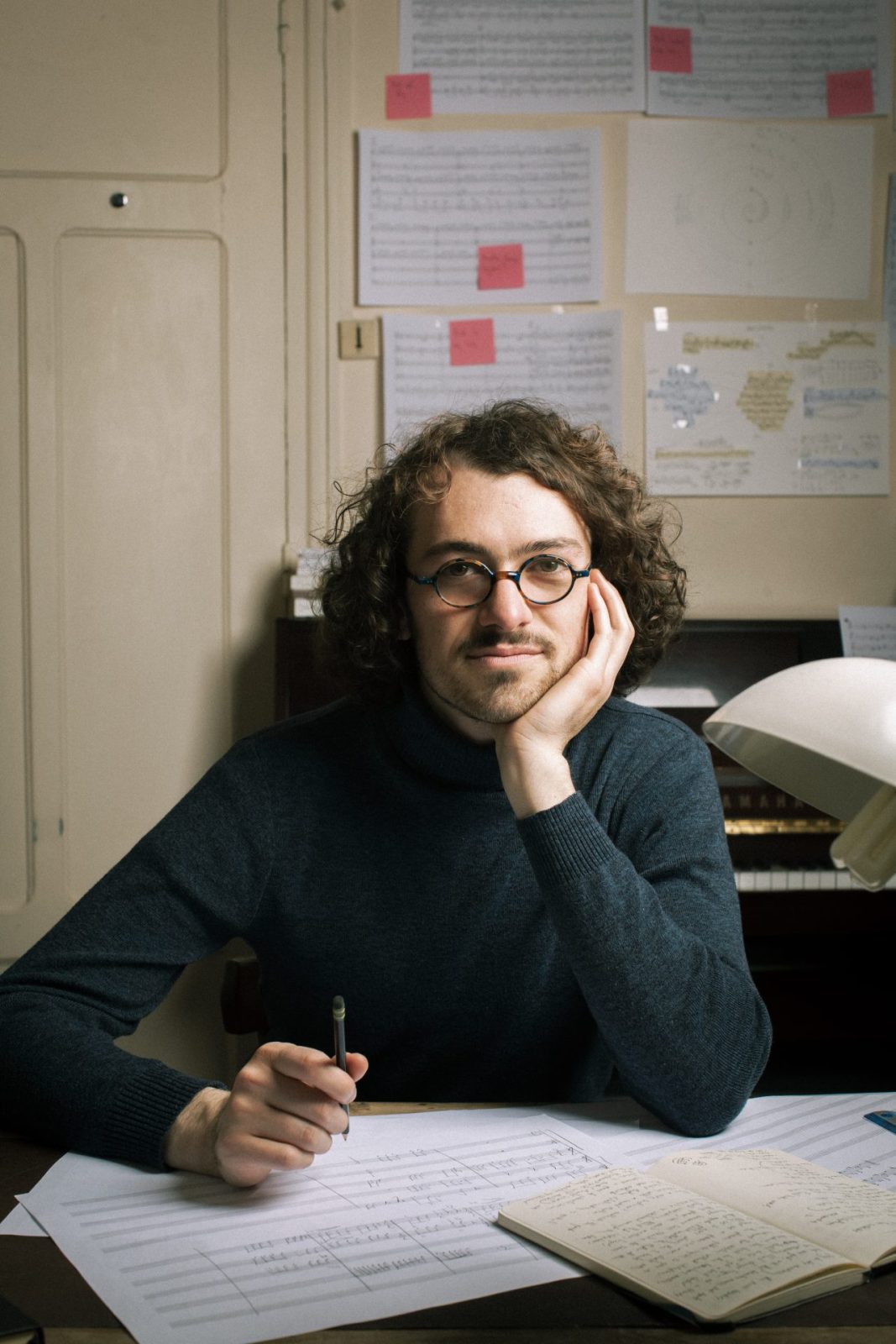
Dayton Hare is a composer from Colorado who often draws inspiration from elements of the natural world around him, striking a balance between narrative and atmosphere. In his work, he hopes to raise questions about our relationship to our environment, elevate under-appreciated beauty found around us, and explore the blurry lines of perception. Commissioned by ensembles such as the New York Youth Symphony, Interlochen Center for the Arts, and the Norfolk Chamber Choir, his “highly textured” (EarRelevant) music has been performed at venues such as Carnegie Hall, Hill Auditorium, Woolsey Hall, the Salle Cortot, and more. He has been programmed by groups including the Utari Duo, Mammoth Trio, Bent Frequency, Ensemble Variances, Yale Percussion Group, and others.
Currently a Paris-based Fulbright scholar and composer-in-residence at the Fondation des États-Unis, he is an advanced student at the École Normale de Musique de Paris, and previously earned his master’s degree in Music Composition from the Yale School of Music and bachelor’s degrees in Composition and English literature from the University of Michigan. He has received fellowships from the Fulbright Program, the National Orchestral Institute + Festival, the Conservatoire américain de Fontainebleau, and the Norfolk New Music Workshop, and won competitions including the Jon Deak First Music Competition and the RED NOTE competition.
Outside of music, Dayton has also worked extensively as a journalist, and served as the newsletter editor of the Ann Arbor Observer and the managing editor of the Michigan Daily, where was also the classical music columnist. As a critic, he primarily covered the contemporary music scene of southeast Michigan.
Artist Statement
While my artistic identity is multifaceted, at the heart of my work lies a deep concern for the natural world and a commitment to using music to promote positive change in the ecological realm. In my music I often try to capture small, fleeting moments of natural beauty that, to me, take on outsized significance, both for their own sake and for nature’s vulnerability in the face of anthropogenic environmental threats such as climate change. I view my portrayal of these moments as an attempt at a kind of consciousness-raising, as a framing device meant to focus the listener’s attention on the importance of things taken for granted. Things as simple as the interplay of light over a lake, or the lonely singing of dawn’s first birds, or the course of an endangered river, or the torrential rain over a barren landscape — all of these are precious, and my portrayal of them is often suffused with a quiet grief for the vanishing of a world rapidly slipping away. Through this portrayal I hope to gently refocus people’s attention towards our slow-motion ecological catastrophe, to stir them to the realization of the preciousness of these moments, to the realization that a world composed of them deserves to be protected. By calling attention to these taken-for-granted things, the things we stand to lose, I hope my art can make some small contribution to a sustainable future.
Proposal
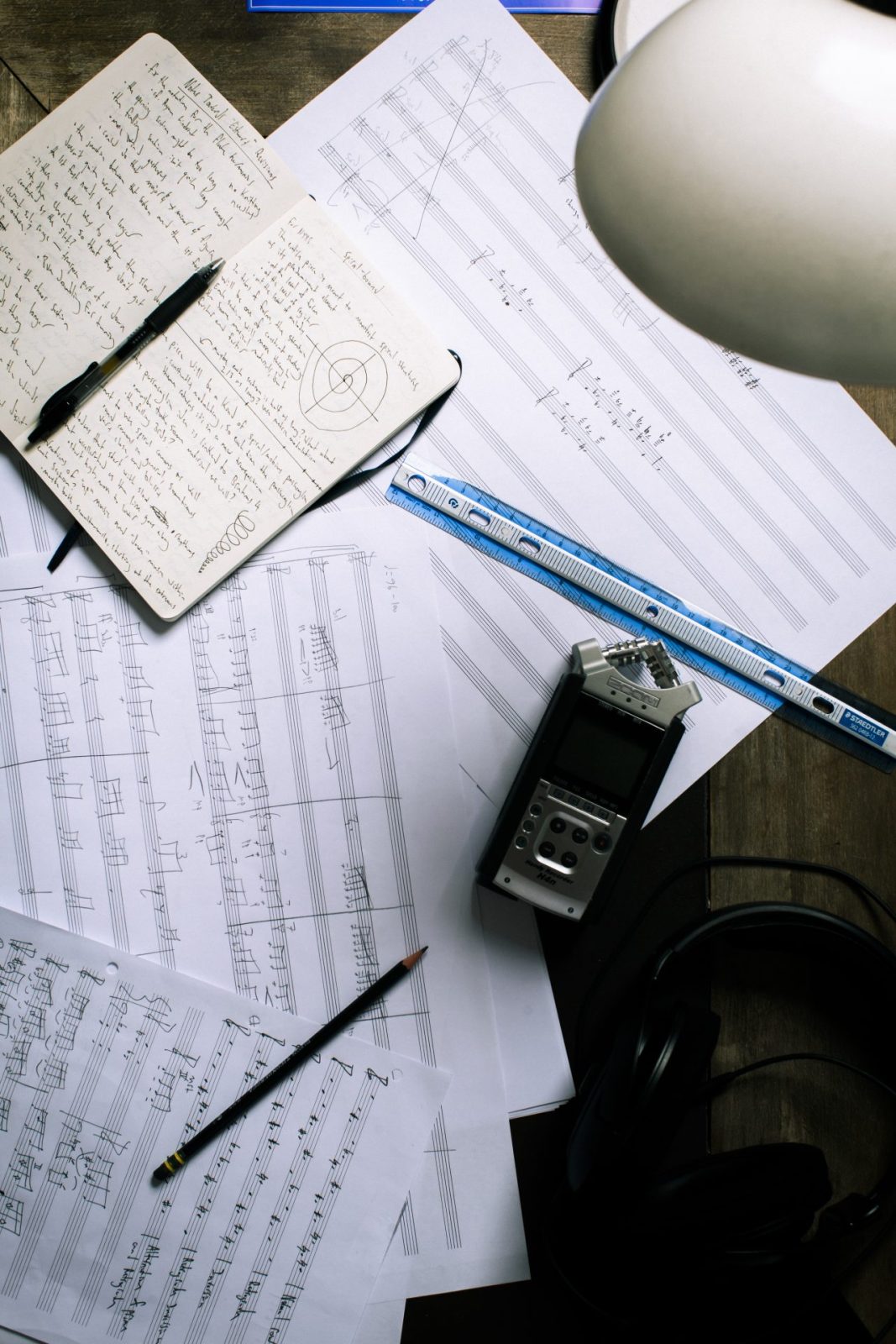
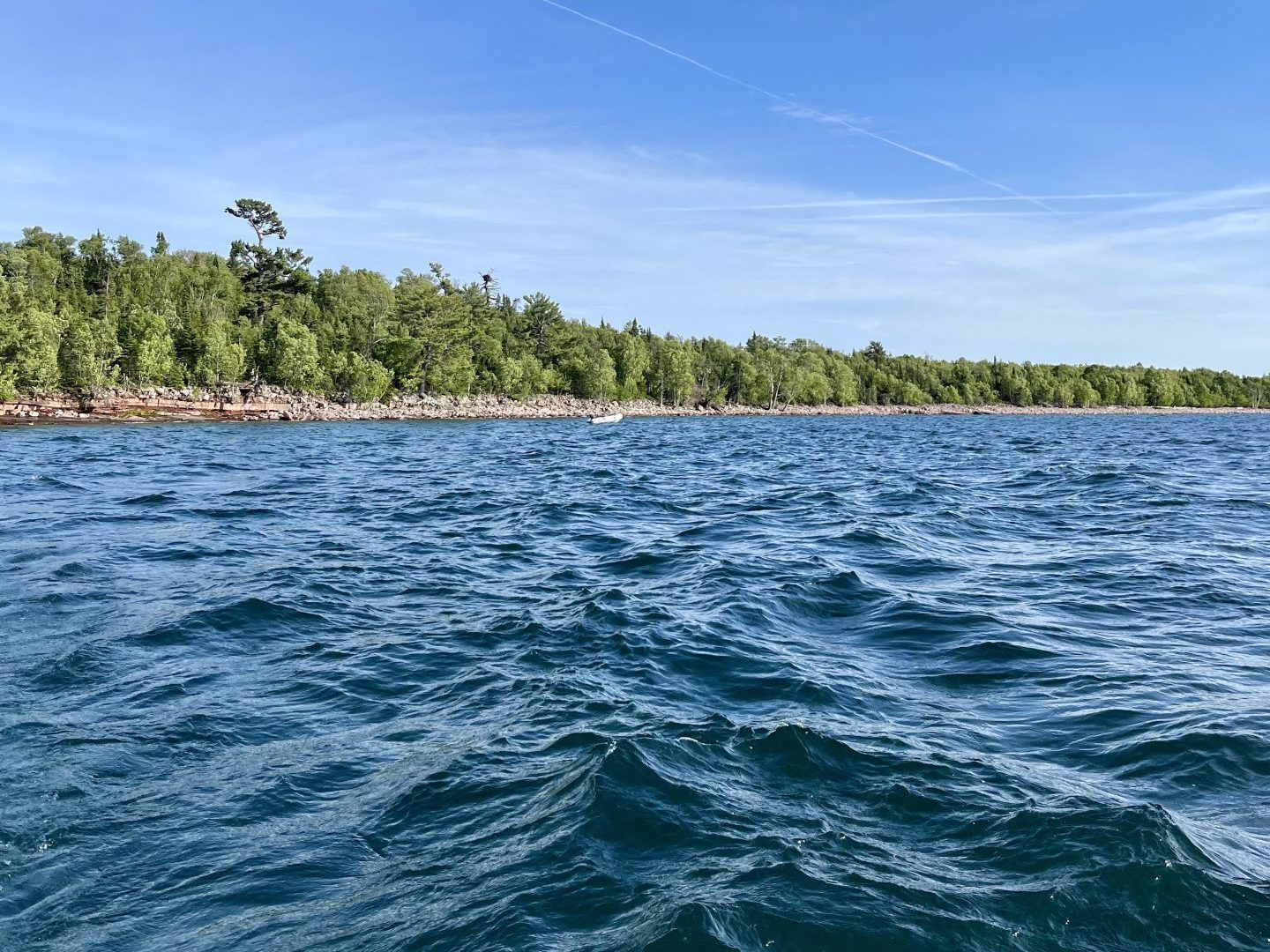
According to the Audubon Society, bird populations of the Great Lakes region are particularly vulnerable to climate change, which is why I want to immerse myself in their sonic world during the Rabbit Island residency. Drawing from the island’s soundscape—composed of both birdsong and other natural elements—I will compose a piece that serves as a portrait of this particular place and moment in time, thereby preserving an artistic record of what may turn out to be, due to human mismanagement of the Earth, an evanescent phenomenon.
First, I will take recordings of the environment itself during the residency; second, I will compose music primarily for woodwind instruments in response to this environment. These two types of material would then be overlayed and interlaced. I will write material that reacts to bird calls without merely copying them, by using their underlying musical logic to invent new music, and by translating avian behaviors such as flocking or murmurations into musical gestures. In addition, I would unravel the temporal rigidity of traditional rhythmic relationships in notated music by employing aleatoric elements, bringing the composed material closer to sound textures found in nature.
But the most important element of the piece would be the way in which it treats the natural environment as a co-equal collaborative partner. Questions of both form and content won’t always be settled by the grand design of a composer but by natural occurrences during the time of the residency. To me, this relinquishing of artistic choice raises important questions of agency and control, highlighting the ways in which humanity is dependent on the conditions of the natural world, and how our own decisions are contingent upon particular kinds of relationships with the biosphere.
About the Rabbit Island 2025 Residency Selection Process
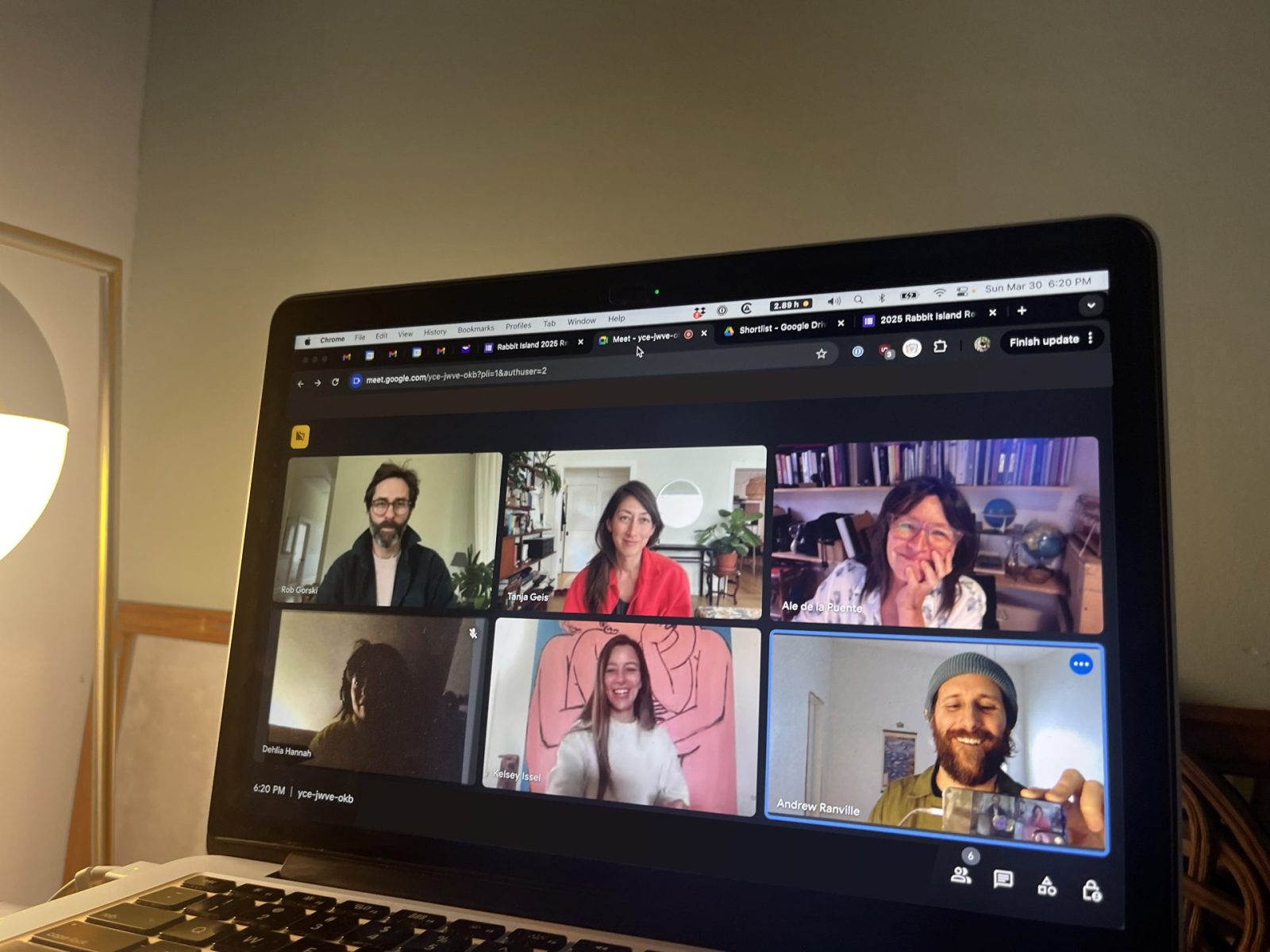
Following the application deadline all 255 applications were made available for review to the six member Selection Committee. Each member was given approximately 42 applications to be lead reviewer on, while all applications were made available for review by the entire committee. From March 2 – 29, 2025, members of the Selection Committee reviewed all 255 applications in detail. Together they read each artist statement and proposal, reviewed the work samples, and visited the links provided in each submission. At the end of this first round of review, an initial shortlist of 46 exemplary applications was created.
These 46 shortlisted applications were compiled for the Selection Committee to review, with the opportunity to add any other applications they thought needed a closer look. Over the course of several hours the committee met virtually to collectively review the shortlisted applications. At the end of their discussion each member voted for the 10 applications they felt were the strongest. These votes were tallied and a finalist list of 10 were chosen. The 10 finalists were interviewed. After the interview process and continued deliberation and discussion, each committee member voted, and the top three applications were awarded a 2025 Rabbit Island Residency. The awarded residencies will be announced by the end of April, 2025.
Rabbit Island 2025 Residency Selection Committee
Ale de la Puente, 2024 Resident, Artist
Tanja Geis, Artist/Curator
Dehlia Hannah, Curator/Writer
Kelsey Issel, Curator/Producer
Rob Gorski, Cofounder/President
Andrew Ranville, Cofounder/Director, Artist
Congratulations 2024 Residents
The Rabbit Island Residency is pleased to announce the selection of three artists for its 2024 program. Each residency will be supported by an unrestricted honorarium of $3,300 USD, made possible by generous grant funding and donor contributions.
Ale de la Puente
Alyssa Songsiridej
Moheb Soliman
To provide insight into the quality and ambition of the proposals received, we are sharing brief biographies of each, along with the artist statements and residency proposals from the residents' applications. We acknowledge that proposal ideas may evolve as the residents experience life and work on the island. We look forward to following their artistic journeys and sharing their research and work throughout the program season.
Since its inception in 2011, the Rabbit Island Residency has supported the creative endeavors of 45 residents and over 90 collaborators. These residencies have resulted in a diverse range of artistic expressions that critically engage with issues of conservation, culture, and our relationship with the natural world. We are confident that this year's residents will continue this tradition and contribute valuable perspectives to these ongoing dialogues.
The selection committee extends its sincere gratitude to all who applied to the 2024 Rabbit Island Residency program. The pool of applicants was exceptional, and while we regret not being able to offer residencies to all, we are honored to be welcoming and working with Ale, Alyssa, and Moheb this summer.
Rabbit Island 2024 Residency Selection Committee
Beau Carey, 2015 Resident, Artist
Claudia O'Steen, 2021–22 Resident, Artist
Juliana Cerqueira Leite, 2020 Visitor, Artist
Kelly Gregory, 2016 Resident, Architect/Artist
Lucía Hinojosa Gaxiola, 2021–22 Resident, Artist
Rob Gorski, Cofounder/President
Andrew Ranville, Cofounder/Director, Artist
Ale de la Puente
Biography
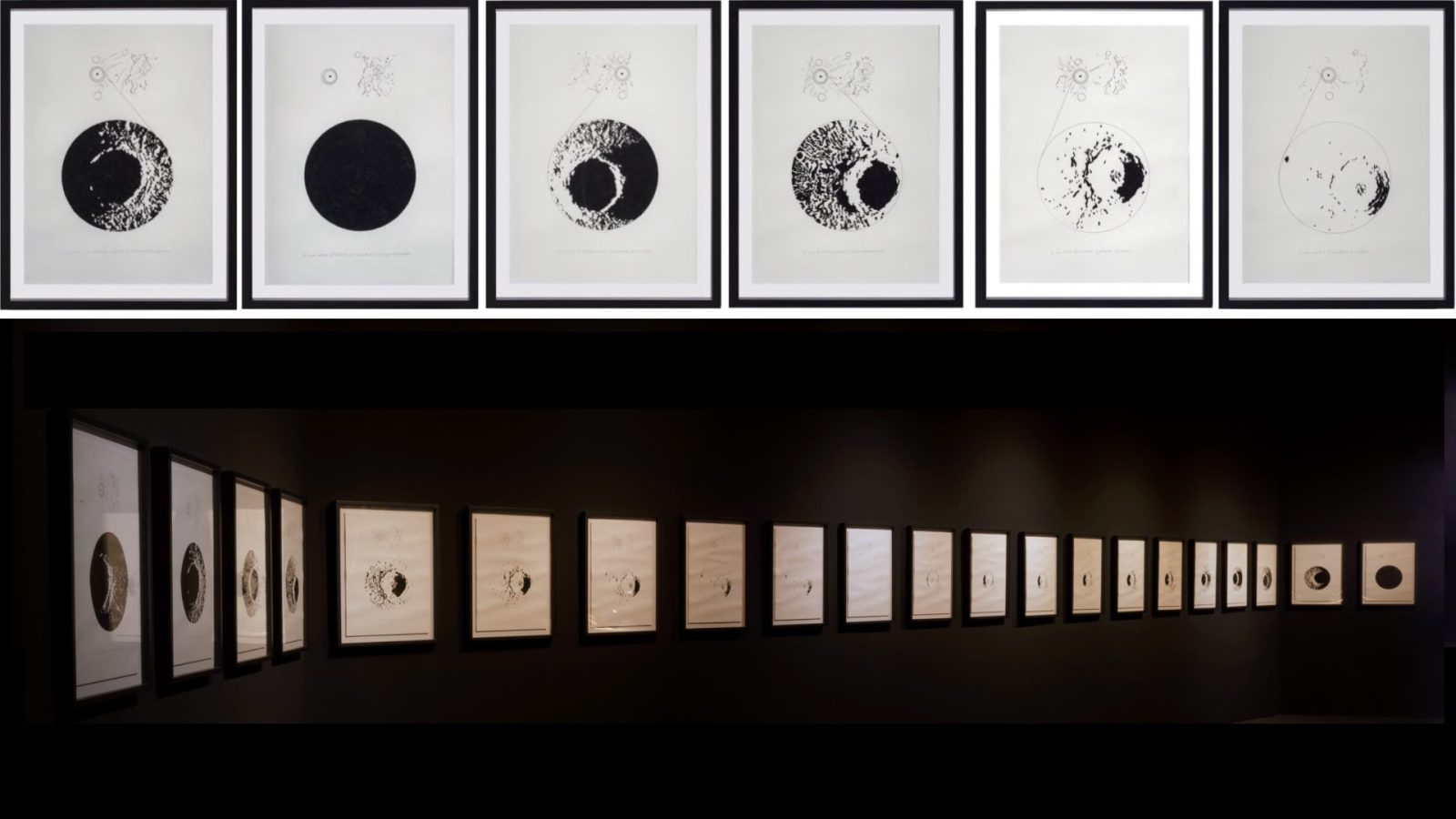
Ale de la Puente’s work deals with notions of time-space and memory through a continuous construction of poetic relations between experiences given by space and time from a technological, scientific, philosophical, to linguistic approach.
Ale's diverse background (industrial design, goldsmith, boatbuilding) and interests in concepts of time and space have lead her to collaborate with researchers working in various fields—from hypnotism, astronomy, and nuclear physics, to meteorology and mathematics. Ale has collaborated with scientists in the realization of her work, and has developed art projects with the Institute of Astronomy and Nuclear Sciences (UNAM, Mexico), the European Center for Nuclear Research (Geneva, Switzerland), the Roscosmos State Space Corporation (Moscow, Russia) and the Kosmica Institute (Berlin, Germany).
Among other distinctions, Ale has been a fellow of Mexico's National System of Creators twice, has obtained an Honorable Mention at Collide@CERN Ars Electronica in 2013, received the Visual Arts Award of the SIVAM Foundation in 2006, and received a fellowship Pollock-Krasner Fellowship (1999-2000). During 2021, she participated in Artists@Sea, a scientific research expedition of the seabed in the Gulf of California aboard the ship FALKOR, an initiative of the Schmidt Ocean Institute. Ale exhibits work nationally and internationally, and is featured in several public and private collections.
Ale is based in Mexico City, Mexico.
Artist Statement
I am interested in poetic and conceptual explorations of time and space across a wide range of mediums, from installations and sculptures to drawings, photography, music, performance, and video. This includes art-science expeditions in search of symbolic natural phenomena, how we signify them, and how we relate to the given meaning. As an artist, I deal with questions that concern scientists and philosophers alike. I am interested in diverse cultural and social contexts informed by past and present events as well as our imagined or expected future events.
Collaborations with diverse disciplines and professions have nurtured my work, but the intimate act of observation is also a central activity in my creative process; this is how I ask myself about what coincides—near, far, and in movement—about points of view and about what coexists beyond space-time. I am interested in how technology, language, culture, history, etc., has affected our perception of time and space and our relationship with nature, even though our presence here is still limited by time and space.
Proposal
It goes like this: ___ Do you know the song?
My proposal during my residency is to create a score that captures a brief fragment of Rabbit Island's existence.
Each place has its own song, a symphony of the rhythms given by nature. The basic pace of everywhere on Earth is the moon cycle, the Sun, solstices, and equinoxes. Then, the distinction of each place is given by its meteorology due to the territory's qualities, followed by fauna and flora. Throughout time, years, and centuries, the rhythms of nature have changed. Our ancestors had observed and registered nature as a necessary act of survival. Observing the rhythms that repeated and the exceptional events of each year, they found the basis for our knowledge of nature. In the beginning, it could have been cave paintings, stone carvings, totems, songs, myths, storytelling, the way human beings create a memory of the natural rhythms, then (you know the history). And now, as a society, our central relationship with nature is data.
I propose to observe and create a notation of everything that happens, moves, changes, or stays still on Rabbit Island and what my senses can reach. I will work with sunrise, sunset, and the moon as a rhythm (I chose the dates that include nearly the time between full and new moons).
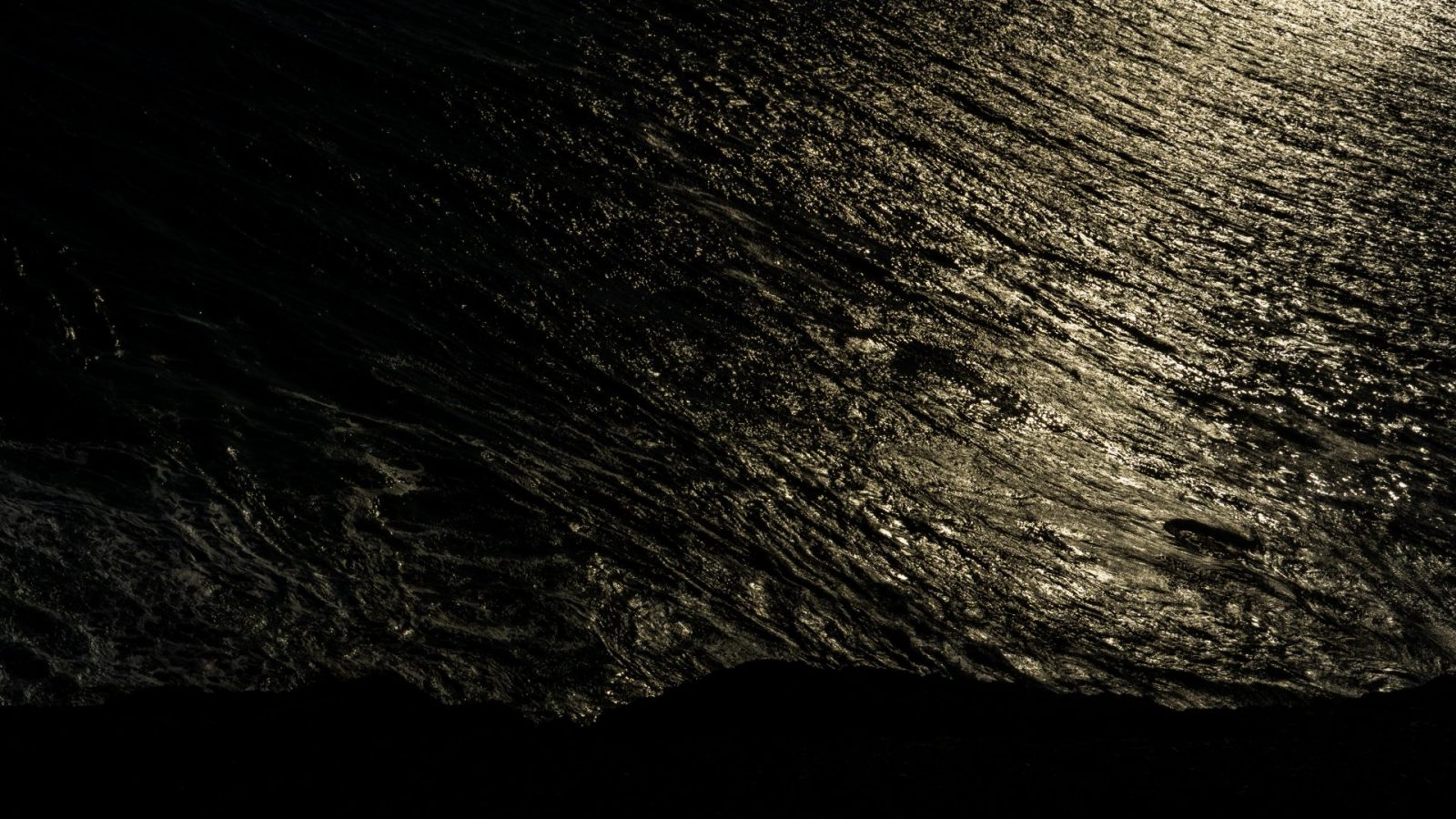
The artwork will be a notation of the changing skies, clouds and winds, light colors, sounds, and fauna and flora's presence and behavior, from leaf fall to insect call.
I foresee an artwork that involves a contemporary score made out of drawings, possibly by objects (sculptures) that musicians or singers could perform. The specific time of the residence score and the imagined one of its origins and becoming. Other possible outcomes include a performance, an artist's book, storytelling, or other media.
Alyssa Songsiridej
Biography
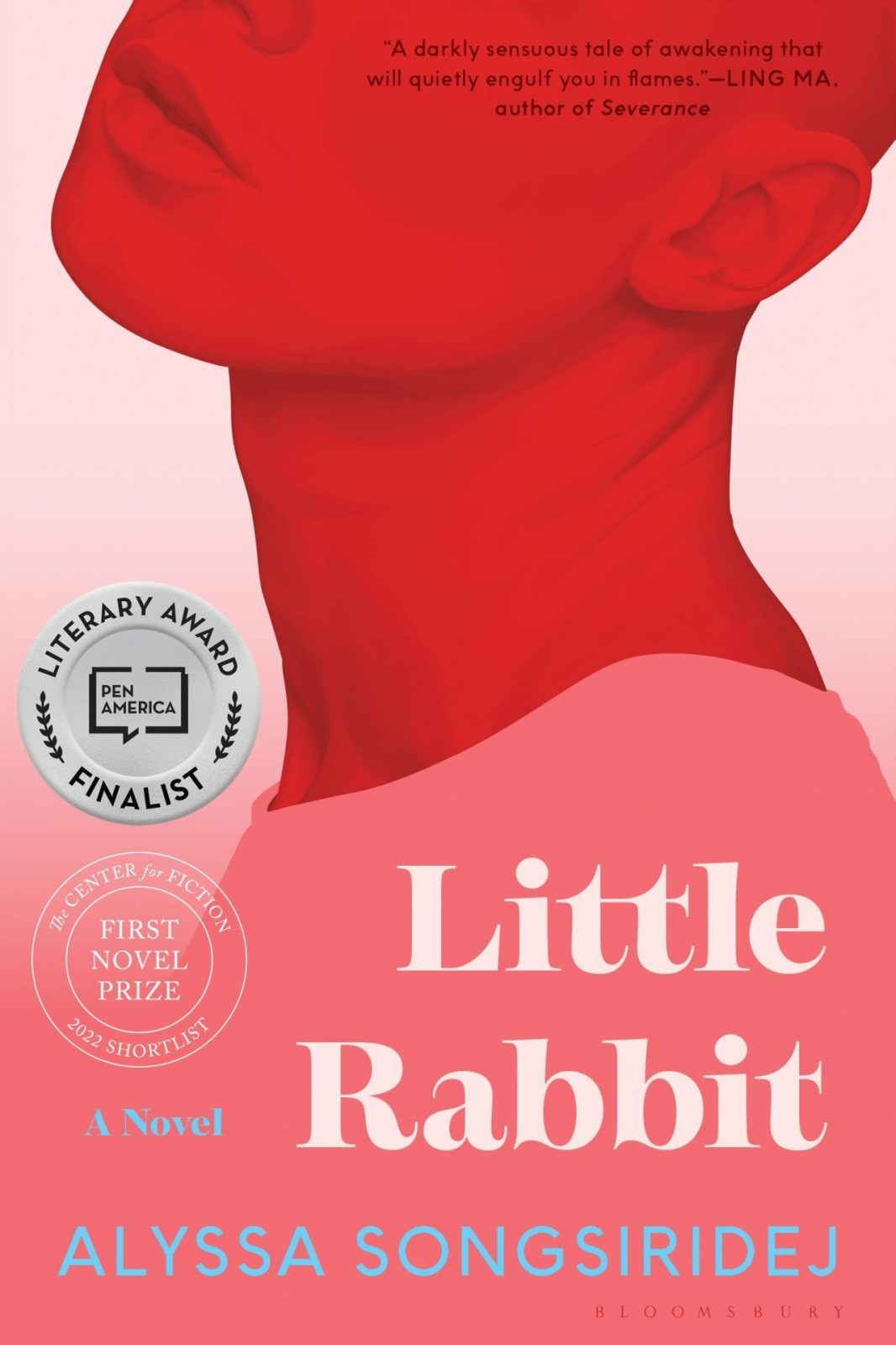
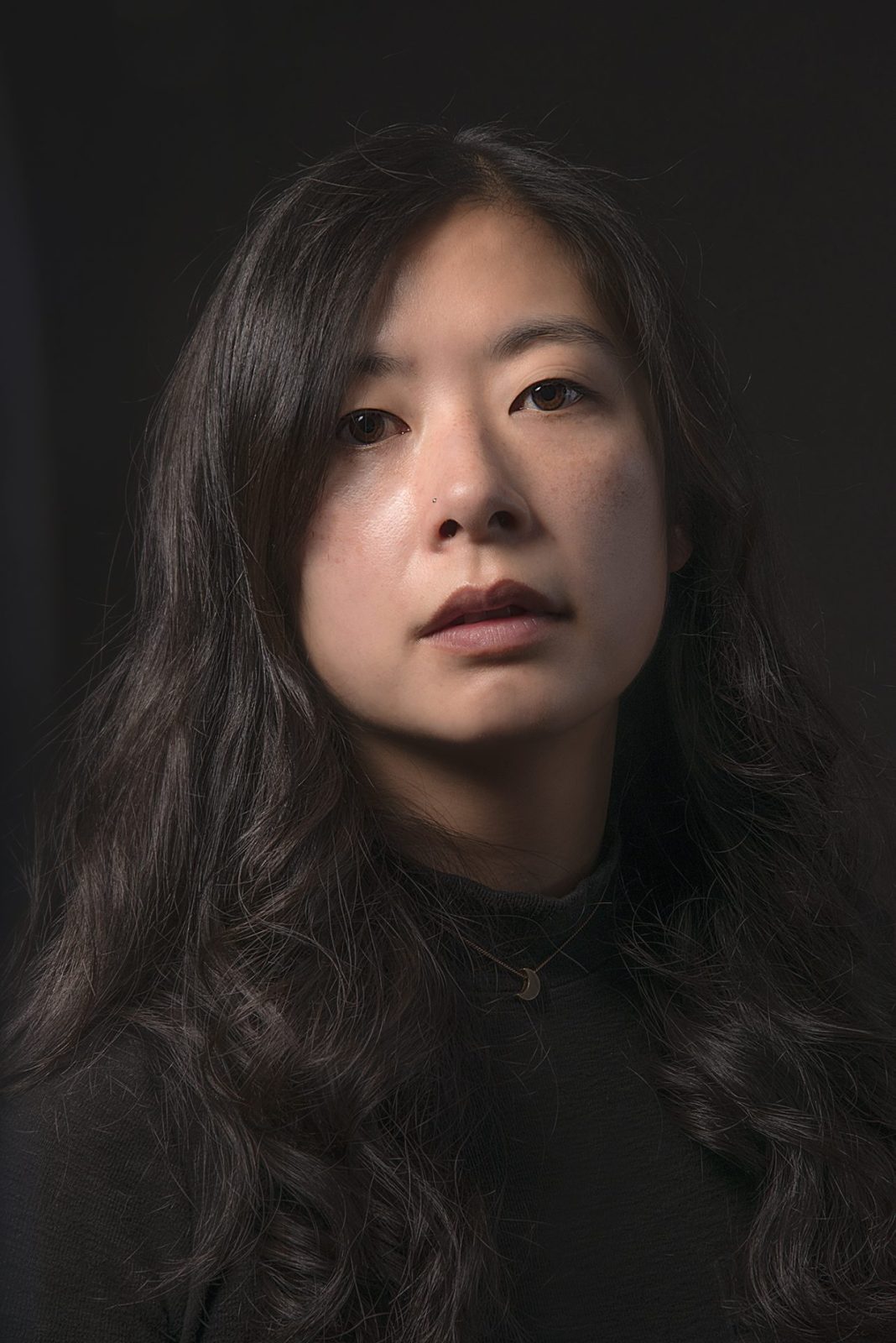
Alyssa Songsiridej is the author of Little Rabbit, shortlisted for the Center for Fiction First Novel Prize and a finalist for the PEN/Hemingway Award and the Edmund White Award. She is also a 2022 5 under 35 National Book Foundation honoree, and lives in Philadelphia.
Artist Statement
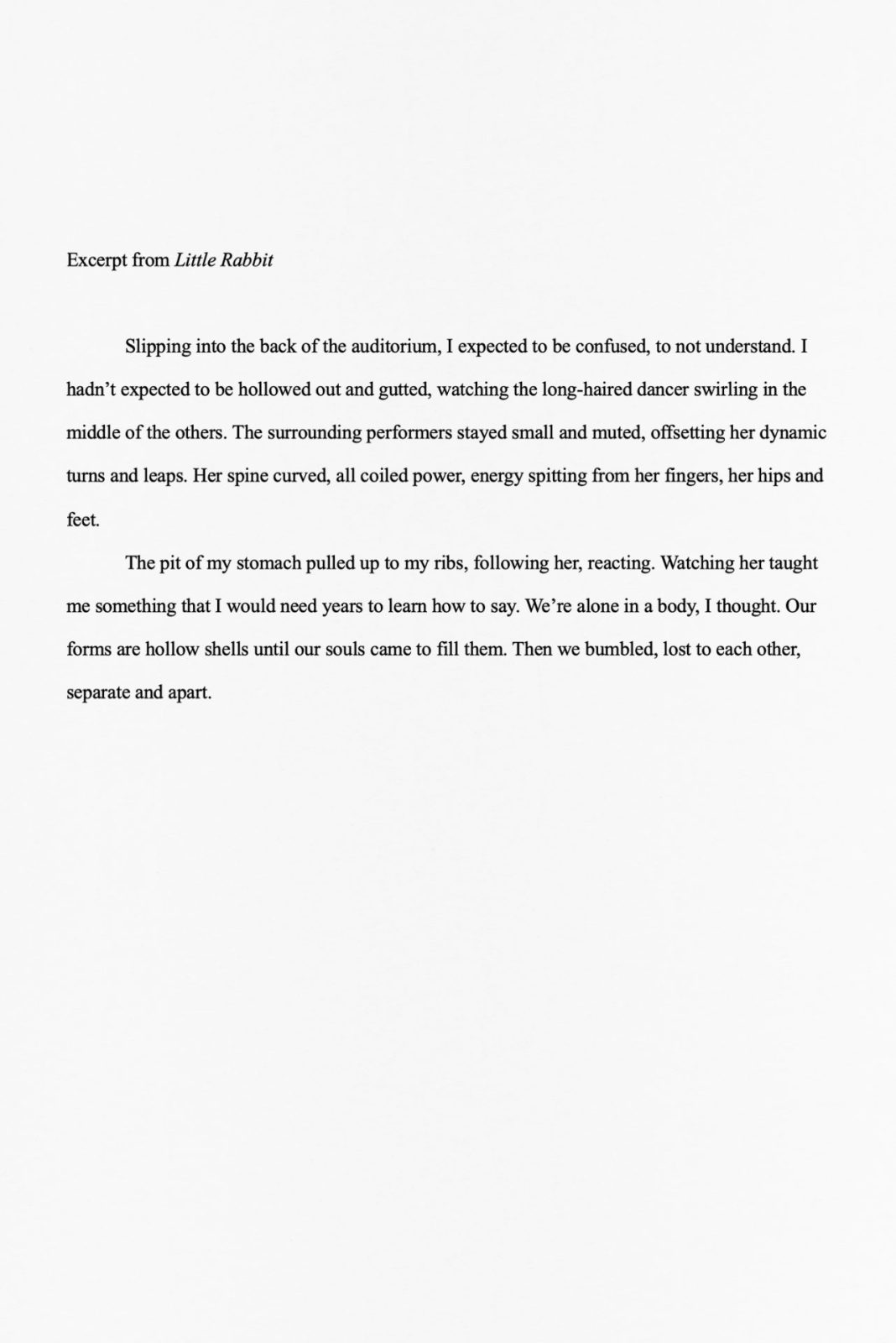
I’m a fiction writer interested in the mutability and strangeness of identity, particularly as it intersects with culture over time. My work explores how the self is influenced by society and the environment. I am particularly interested in the embodied experiences of women, typically Asian American bisexual women who exist on the fault lines of different identities. For example, my first novel, Little Rabbit, follows a young queer writer as she embarks on an intense affair with an older male choreographer, exploring the challenges and complications of making art under capitalism. Recently, as my peers and I grapple with parenthood under climate catastrophe, my interest has grown to include our role as human animals, and our obligations and responsibilities to each other and the planet. My new project explores a woman’s experience of pregnancy in an accelerating moment of climate change on remote and increasingly dangerous island off the coast of southern New England.
Proposal
My project is from the point of view of a pregnant woman who has fled her marriage for a remote island, which increasingly becomes its own active character in the novel. My experience on Rabbit Island will give me the critical sensory details and experience needed for this aspect of the work. The rough outline of my project concerns Tesa, who at age 37 becomes unexpectedly pregnant. Because her husband is morally opposed to having children due to climate change, she avoids telling him and instead moves with her friends to the aforementioned island.
The goal of this work is to depict climate change in a realist mode, rather than a speculative or “cli-fi” lens. I’m highly influenced by Amitav Ghosh’s 2015 book, The Great Derangement, which argues that modern literary novels are built on improbable but believable human actions, instead of the probable but unbelievable transformations of the natural world. This focus on the individual limits the novel's ability to address the broad societal upheavals caused by a warming atmosphere.
Moheb Soliman
Biography
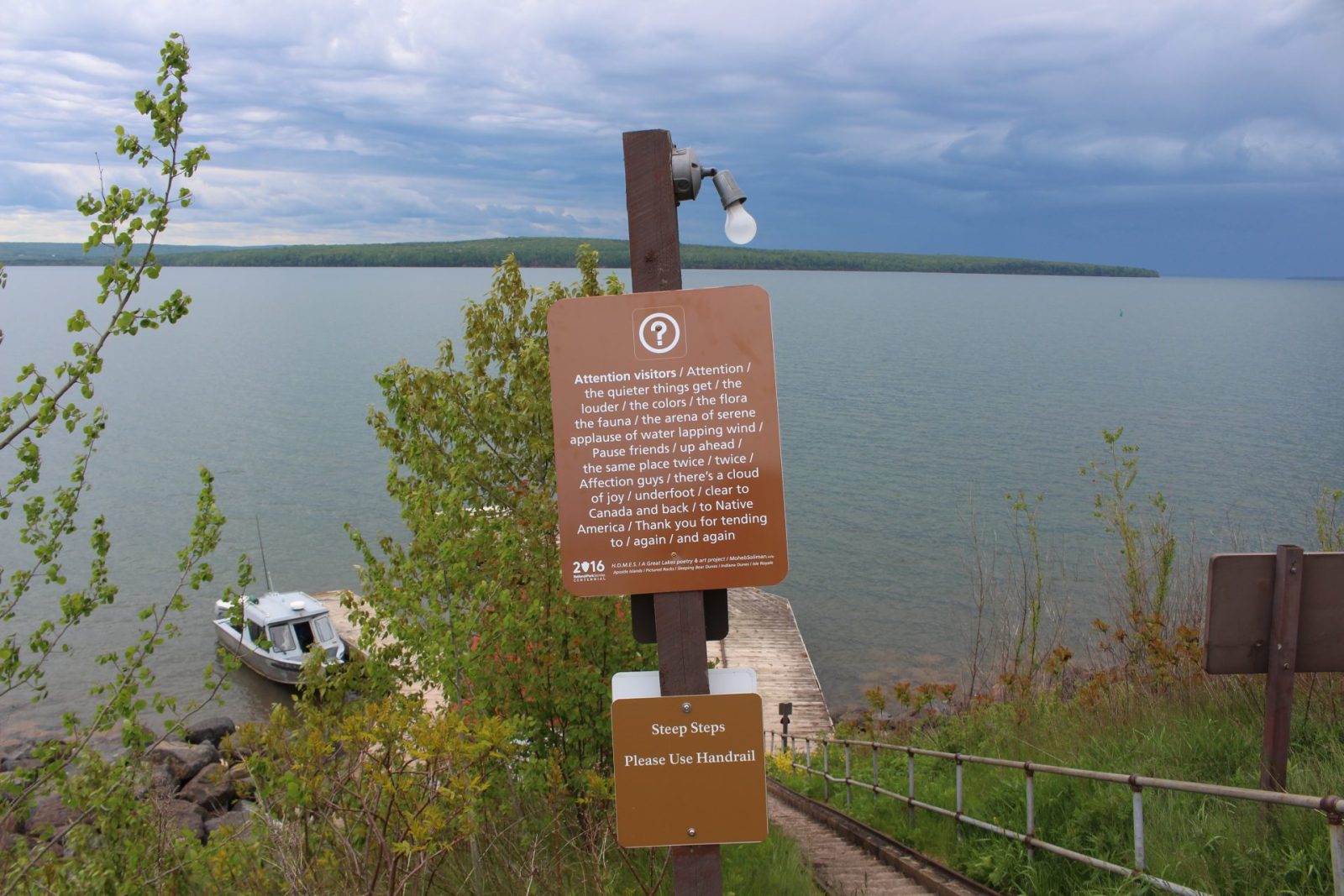
Moheb Soliman is an interdisciplinary poet from Egypt and the Midwest who has presented work at literary, art, and public spaces around North America and abroad with support from diverse institutions. His debut poetry collection HOMES was a finalist for several awards and explores nature, modernity, identity, belonging, and sublimity through the site of the Great Lakes bioregion/borderland. He lives in Minneapolis in the Dakota and Anishinaabe homelands of Minnesota where he was program director for the Arab American arts organization Mizna before receiving a multi-year Tulsa Artist Fellowship and recently a Milkweed Editions fellowship.
Artist Statement
I consider myself an interdisciplinary poet, working with language in performance, installation, and video projects, often in site-specific ways in art and public spaces, sometimes using social practice and other relational methods. For more than a decade, I've returned to themes of nature, modernity, identity, and belonging through the site of the Great Lakes region. As a child immigrant from Egypt to the Midwest who’s lived on both sides of the border, issues of place, home, and otherness have been deep preoccupations for me. My work takes up the concept of the non-human living word both as an intimate axis for identity like race or gender, yet also as a "supreme other" for which we're always reaching and projecting onto. It takes up in critical and creative ways the nature/culture dichotomy and the tensions of environmentalism and identity politics in shaping contemporary life. The Great Lakes are an unparalleled site for exploring the above as hyper-industrialized yet sublimely wild; brutally colonized but incredibly diverse; the world’s largest watershed, and also borderland. My projects engage these issues through an insider-outsider experience, shared by many around the region and beyond.
Proposal
This is a performance art project, and an existential one. A deculturization project; a naturalization project beyond nation-state terms. This is symbolic, speculative, sublime (scientific sense).
I will go to Rabbit Island and return as the artist formerly known as Arab American. I desire to shed this troubled identity on behalf of all who find race, if reclamatory and celebratory, also limiting and poor. It’s too much all these years, tossed between spectral ends of mass prejudice and peer pressure, vigilance and burden. We need an out. Both raced bodies and a post-racial world are problematic—let me guinea-pig the latter, settle new space in-between.
Through daily protocols of embodiment, poetry, audio and video, and other site-specific methods, I aspire to re-orient to the trans-human living sphere. To cease being marginal, foreign species, transplant, and become an American; or no, a North American; no—GREAT-LAKESAN—a whole bioregional being, non-native yet non-invasive non-taxonomized member of a heterogeneous place-based community.
Somewhere between Donna Haraway’s cyborg ecofeminism, Joseph Beuy’s performance I Like America and America Likes Me, and the fathoming pangs of Egyptian singer Umm Kalthum, I will make brief life and art shucking this body and inhabiting the creaturely. I don’t know what I’ll become; I know what I seek to transcend. I feel others like and unlike me will find the process equally illuminating, challenging, liberating, impossible.
About the Rabbit Island 2024 Residency Selection Process
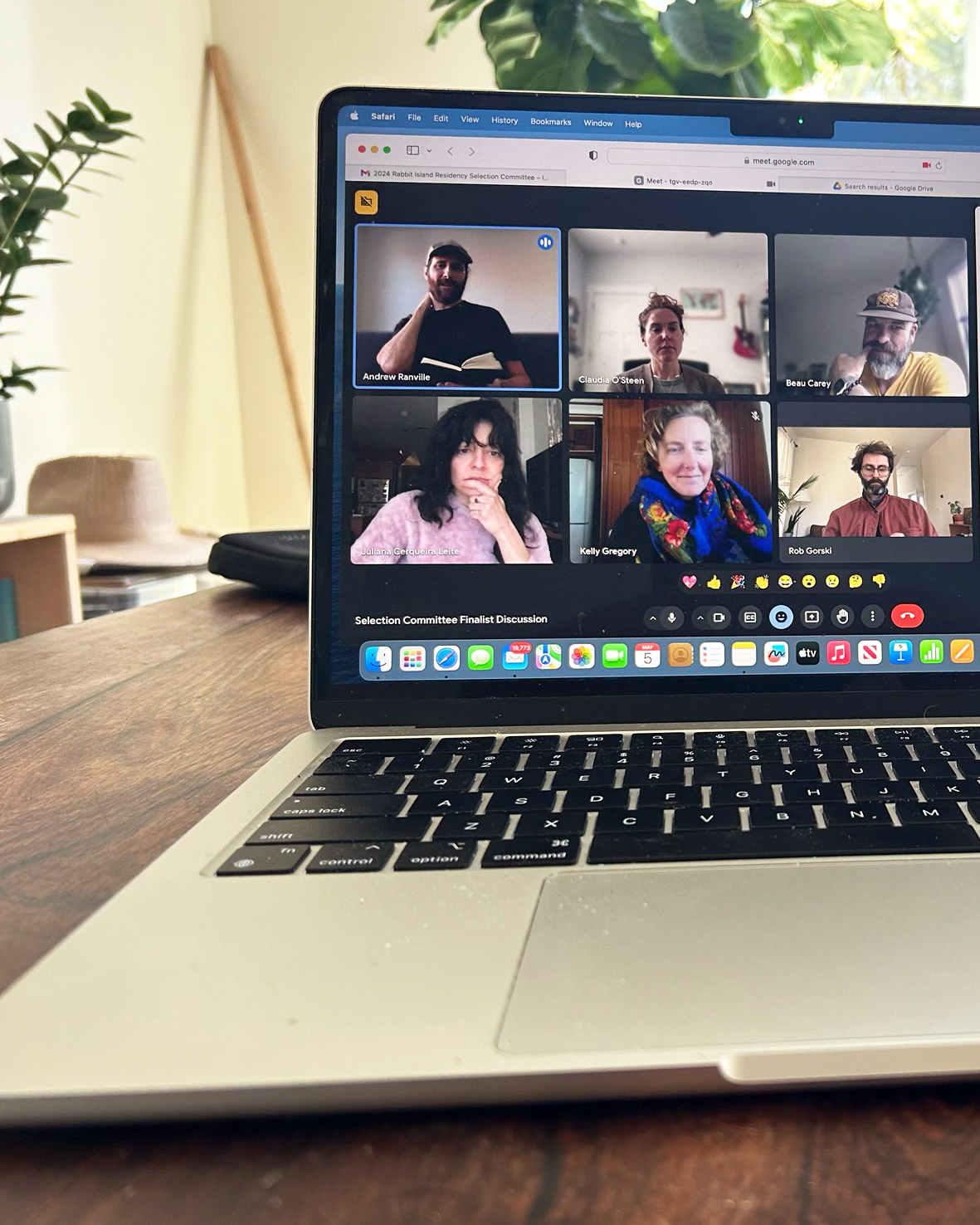
Following the application deadline all 313 applications were made available for review to the seven member Selection Committee. All members were invited to make notes and to provide feedback as the first round of the review process began. From April 16 – 25, 2025, four members of the committee took the lead in reviewing all 313 applications in detail. Together they read each artist statement and proposal; reviewed the work samples; and visited the links provided in each submission. At the end of this first round of review, an initial shortlist of 43 exemplary applications was created.
These 43 shortlisted applications were compiled into a new folder for the Selection Committee to review in detail. From April 25 – 29, 2024, members of the committee independently reviewed the initial shortlist and selected the 10 applications they felt were the strongest, with the opportunity to add any application from the total pool of 313 that they thought needed a closer look. On the evening of April 29, the seven member committee met via videoconference and deliberated for several hours to reach a finalist list of 10 applications.
Finalists were interviewed on May 3 – 4, 2024. After the interview process and brief discussion, the Selection Committee felt strongly in favor of many of the finalists applications and scheduled an additional day of deliberations. The committee met via videoconference on May 5, 2024, and discussed individual Finalists at length. After submitting ranked-choice votes and discussing the results, the committee ultimately awarded three residencies for the 2024 program season. These residents will be announced in the second week of May.
Rabbit Island 2024 Residency Selection Committee
Beau Carey, 2015 Resident, Artist
Claudia O'Steen, 2021–22 Resident, Artist
Juliana Cerqueira Leite, 2020 Visitor, Artist
Kelly Gregory, 2016 Resident, Architect/Artist
Lucía Hinojosa Gaxiola, 2021–22 Resident, Artist
Rob Gorski, Cofounder/President
Andrew Ranville, Cofounder/Director, Artist